

“Seeing our home materialise… really gave us joy. Every day the anticipation built until work was complete.”
- Owner
Terabithia House
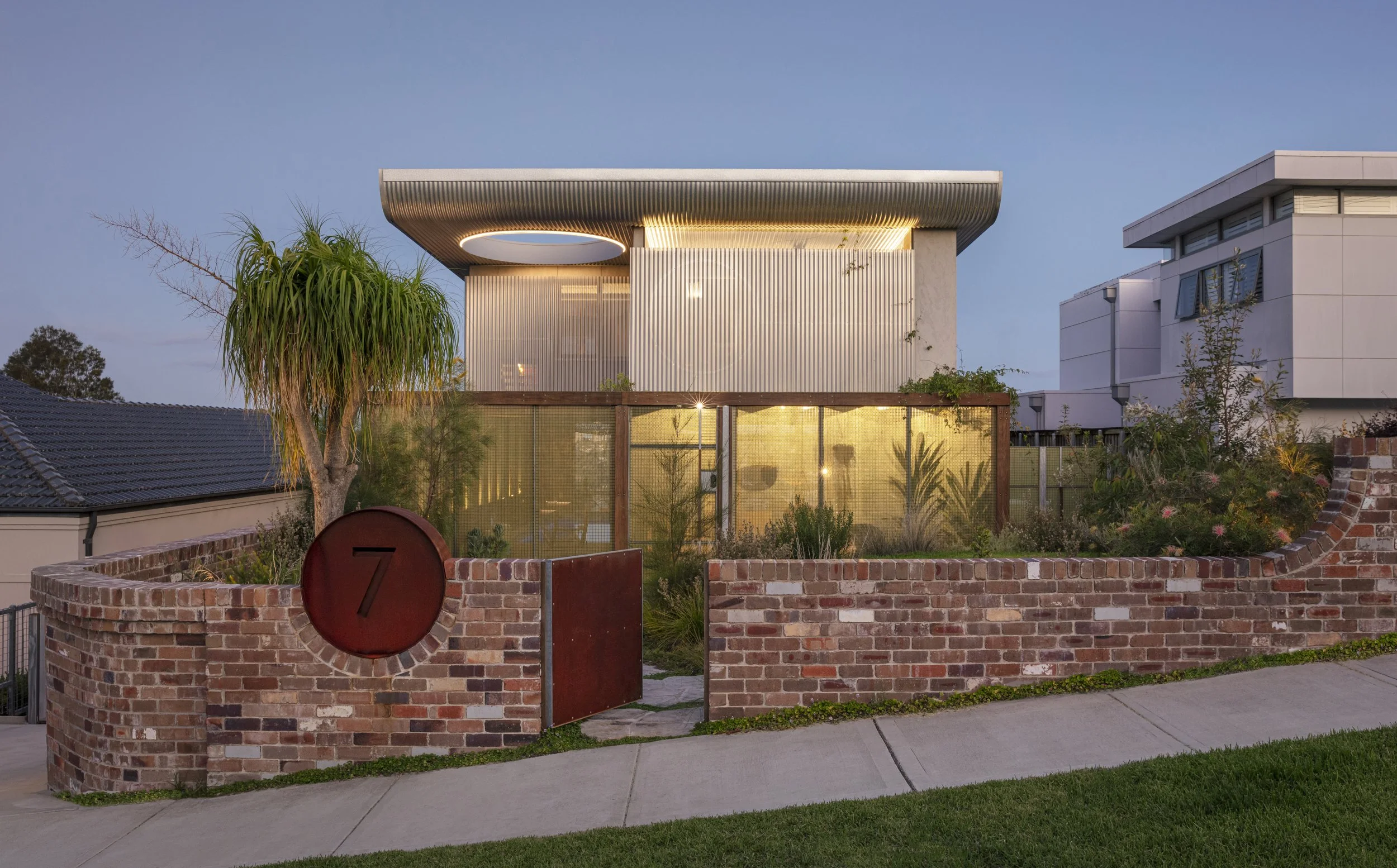
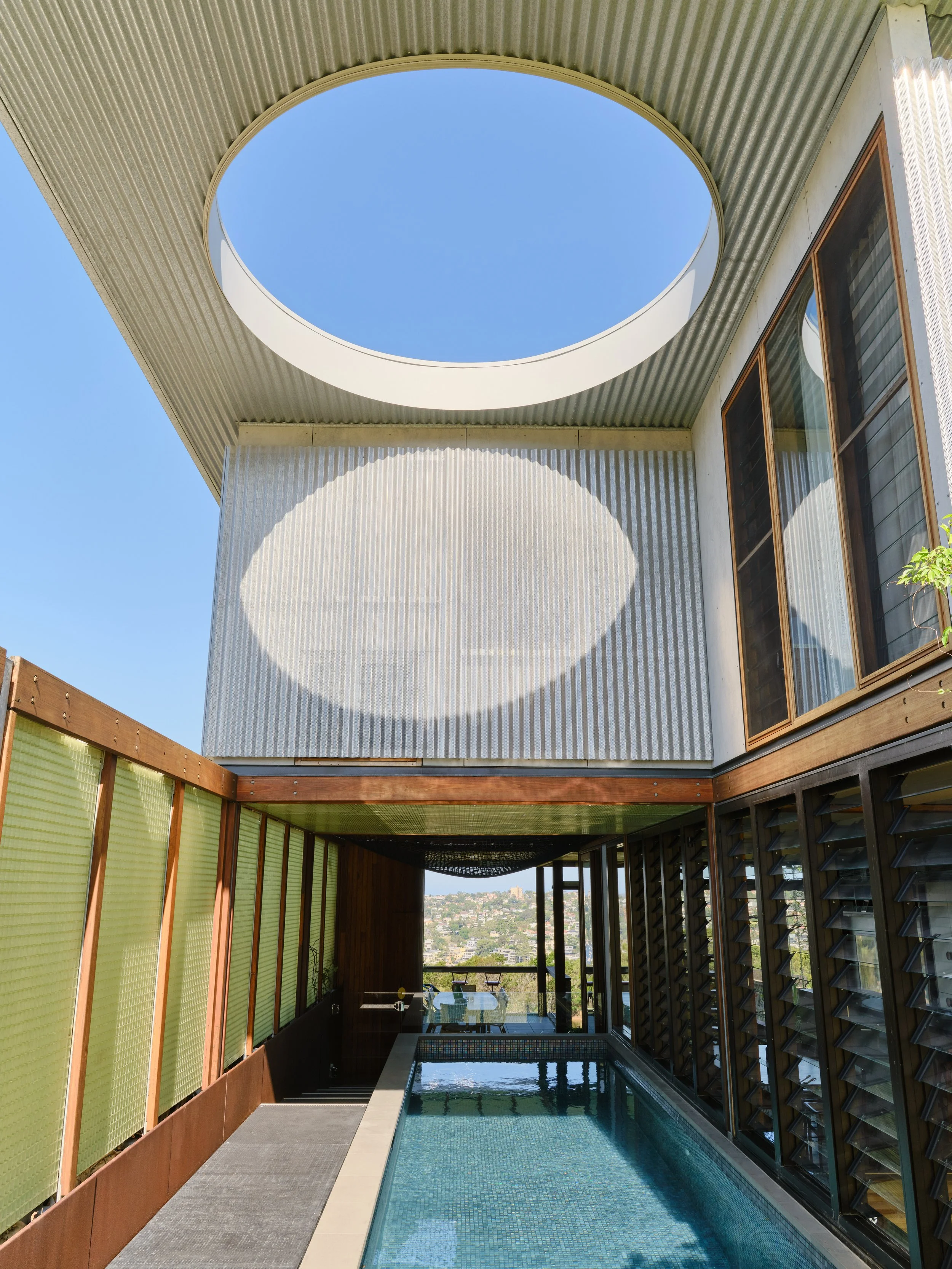
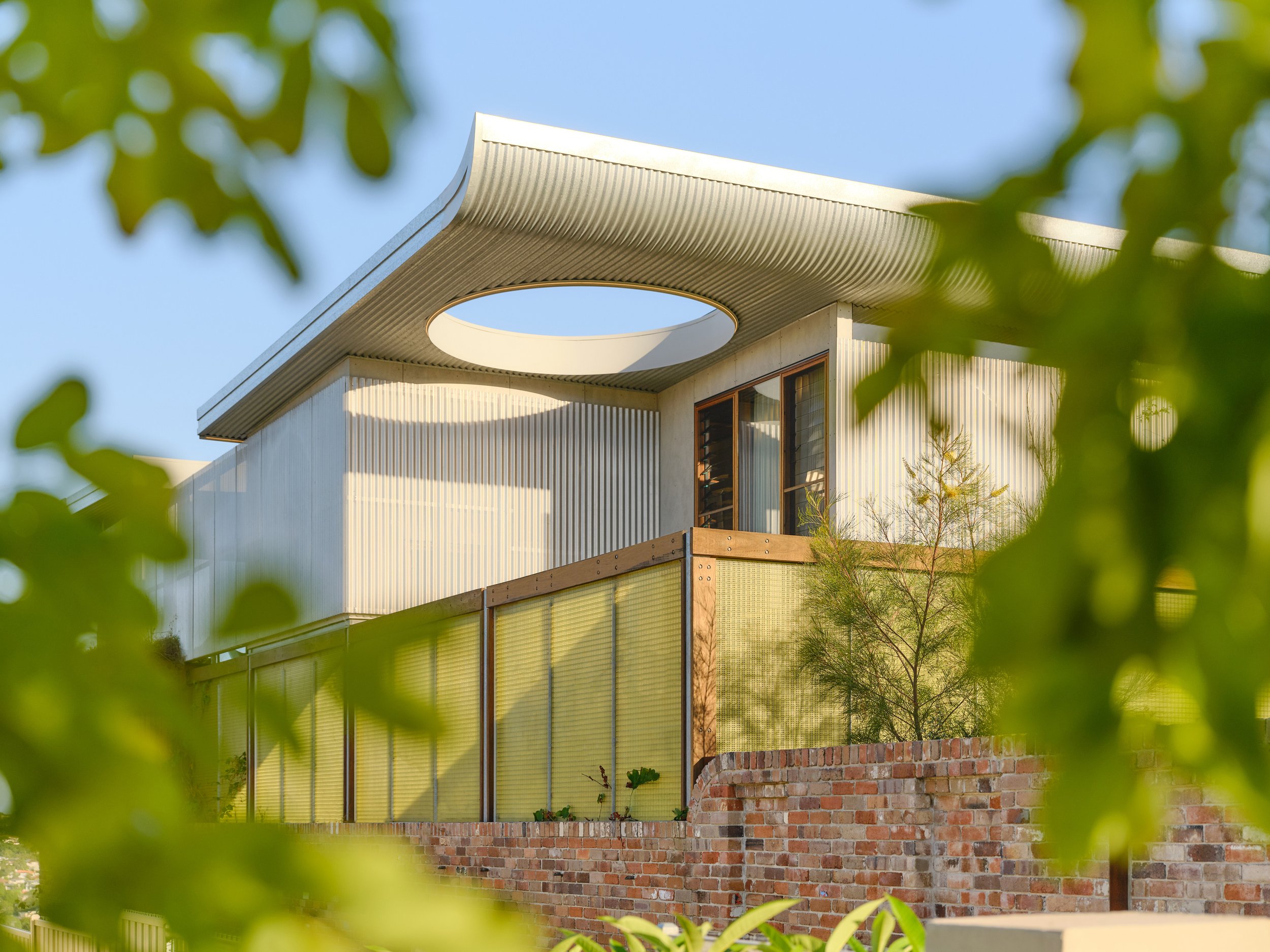
Terabithia House’s metal roof looks like a butterfly about to take flight. An oculus opens cheekily like an eye, throwing light on the pool below. Behind this dramatic and playful facade, an airy sustainable home unfolds downhill, drinking in light and views. Jade-tinted lattice makes this family haven delightfully private.
Photography by Murray Fredericks and Renata Dominik

13kW solar PV system
Rainwater tanks with 10,000L capacity
Hydronic underfloor heating/cooling for bottom two floors
Hydronic heating/cooling radiators for top floor (bedrooms, study)
Hydronic hot water heating
Recycled timber doors and windows throughout
Recycled hardwood flooring throughout
Recycled hardwood benchtops and stair treads
Recycled dry pressed brick walls and fence
‘Second skin’ perforated screen and fibreglass lattice (FRP) panels for shading and airflow


About this home
The brief
CplusC was engaged to replace a dated house in Sydney’s Northbridge with a comfortable new modern home for a family of four. The owners wanted a sustainable and energy-efficient home that celebrated the sparkling Middle Harbour and golf course views. The design brief specified protected and private outdoor living and dining spaces, and a kitchen with a walk-in pantry. The owners wanted a heated swimming pool with swim jets and its own bathroom and steam room. They needed a main bedroom with ensuite, two bedrooms for the children and a guest room. On their wish list was a place to hang artworks and a multipurpose space to use as a craft room or study. They emphasised low-maintenance living with ample storage, a two-car garage and a laundry with direct access to the outdoors. And they wanted an energy-efficient and sustainable home with a photovoltaic solar system and rainwater tanks. The owners said: “We wanted easy living, a place that’s easy to care for and sustainable.”
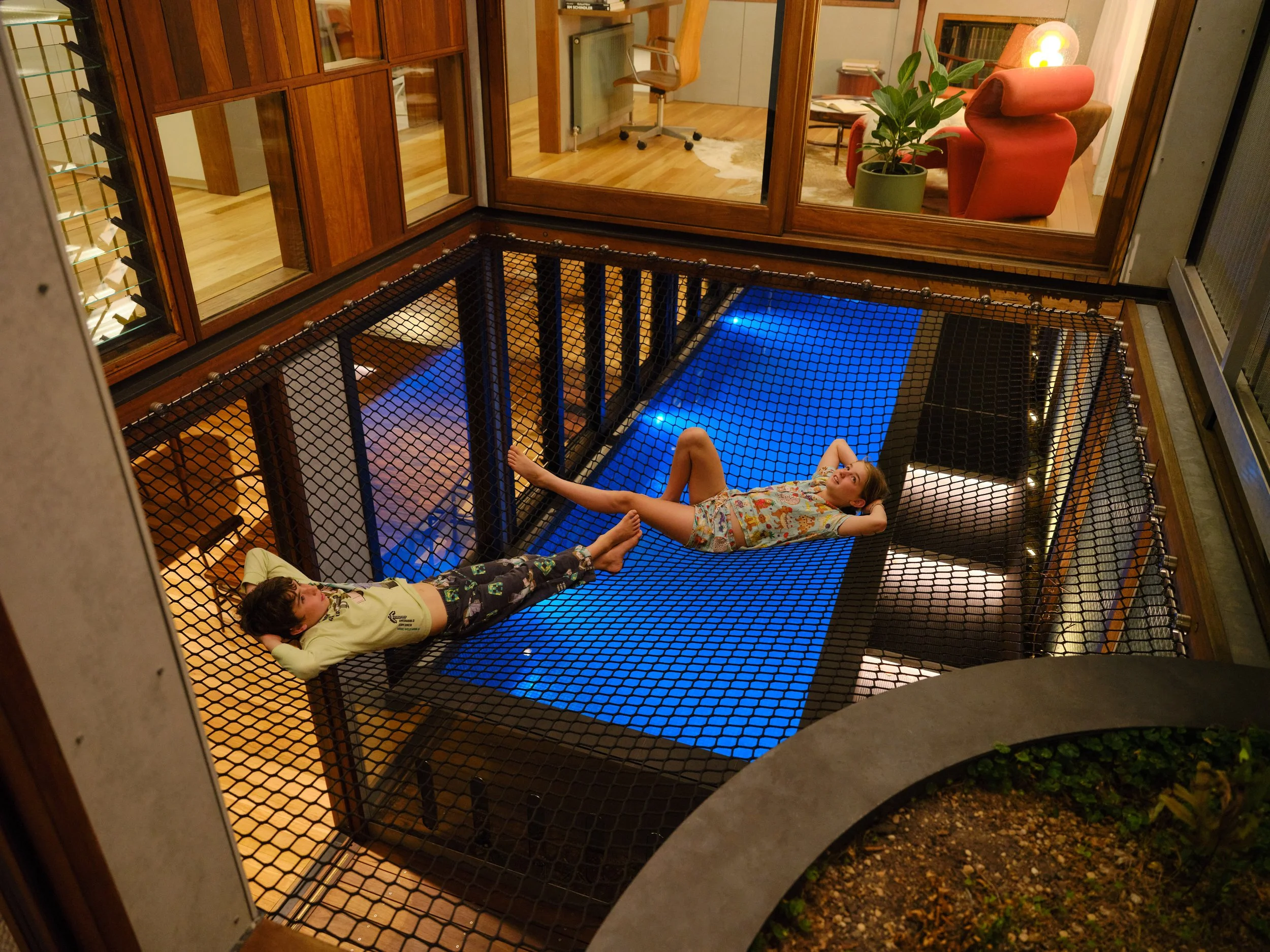
“When CplusC shared their design for our home we loved how it let in the light. Having the pool close to the living areas made complete sense to us. And the kids loved the cargo net.”
–Owner
The site
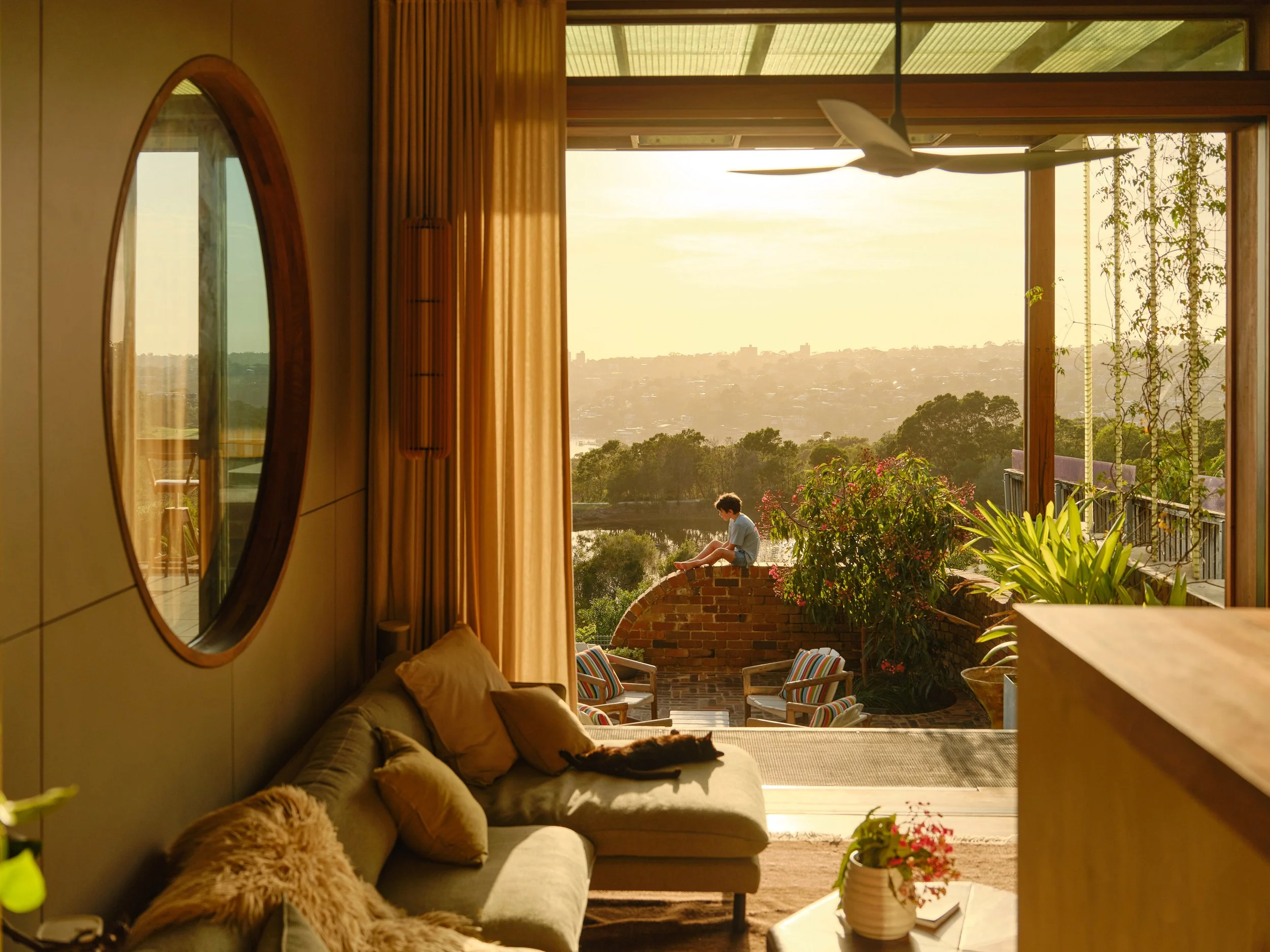
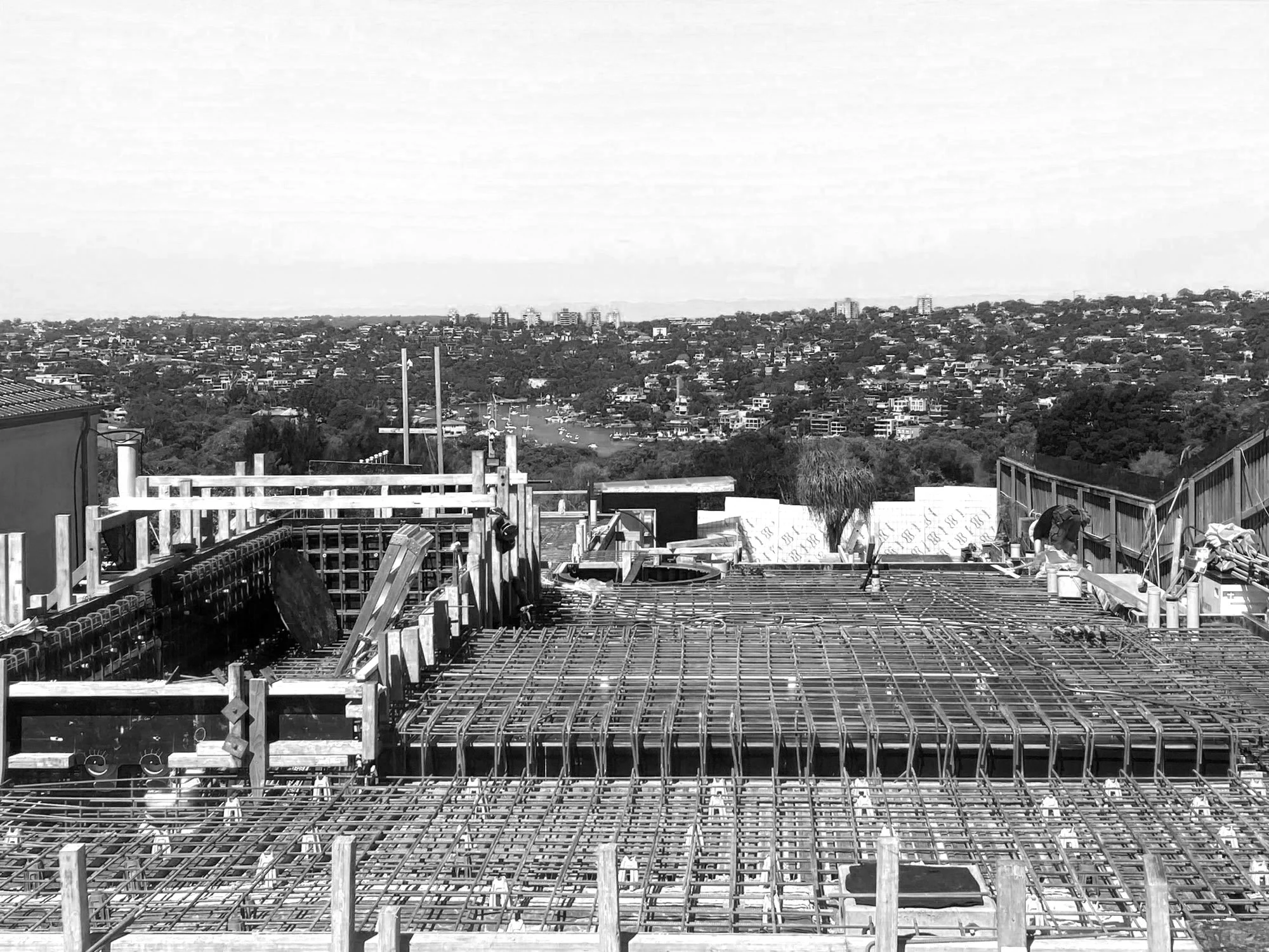
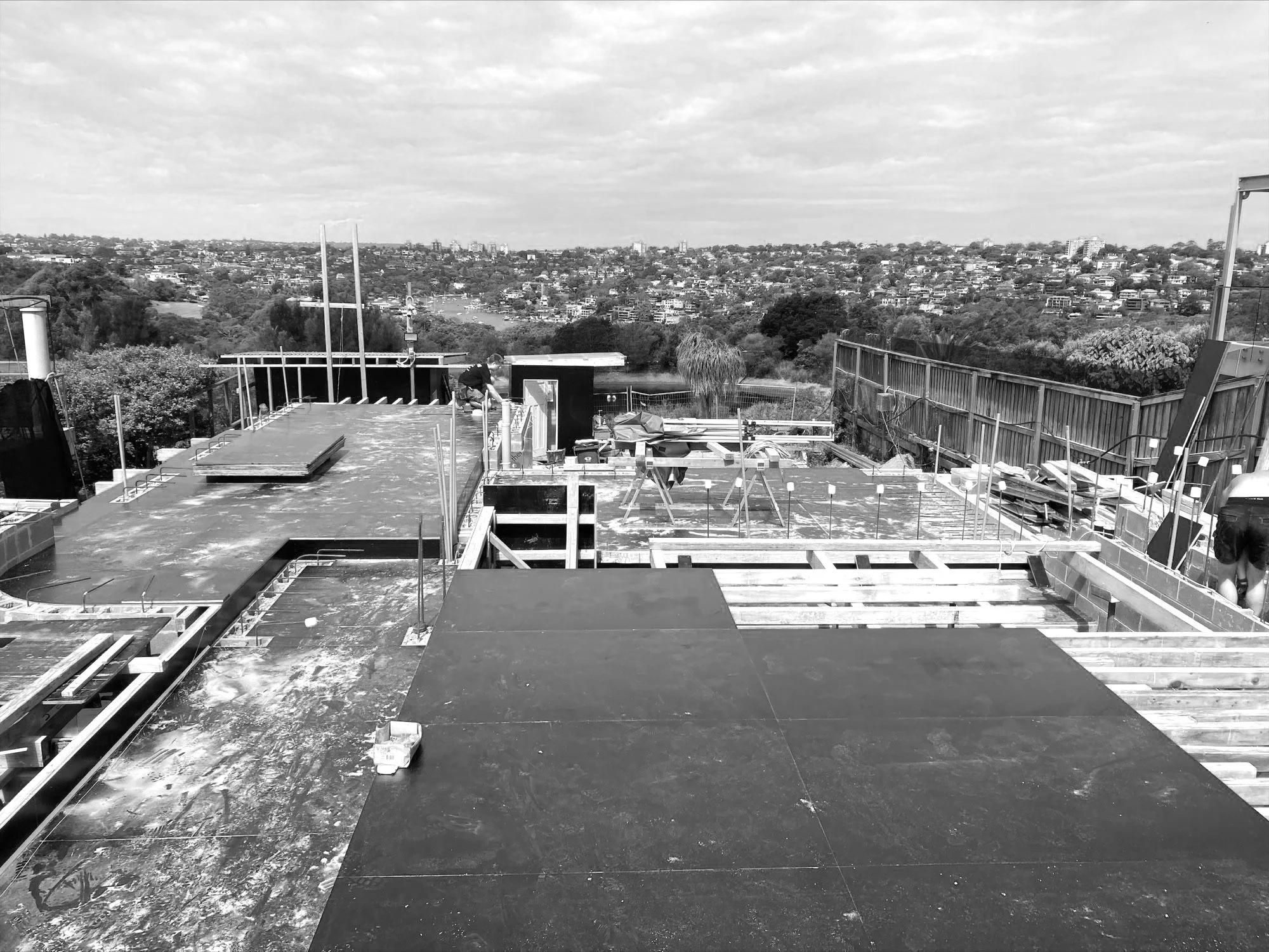
In Sydney’s Middle Harbour suburb of Northbridge, the elevated site featured a modest freestanding house dating back to the 1930’s. The lot slopes downhill to the rear with verdant views across Northbridge Golf Course to sailboat-dotted Quakers Hat Bay and Beauty Point headland. CplusC saw ample opportunity to create a light-filled yet private multilevel home that basks in this vista from multiple rooms. To preserve neighbours’ views, all levels would need to be carefully planned within council height limits. The design would also need to be bushfire-aware and protect a heritage conservation area beside the rear of the site.
The design
CplusC’s concept for Terabithia House bridged the different personalities, perspectives and desires of the owners and the site’s many opportunities and constraints to create a private heartland where everyone in the family can express themselves and be together.
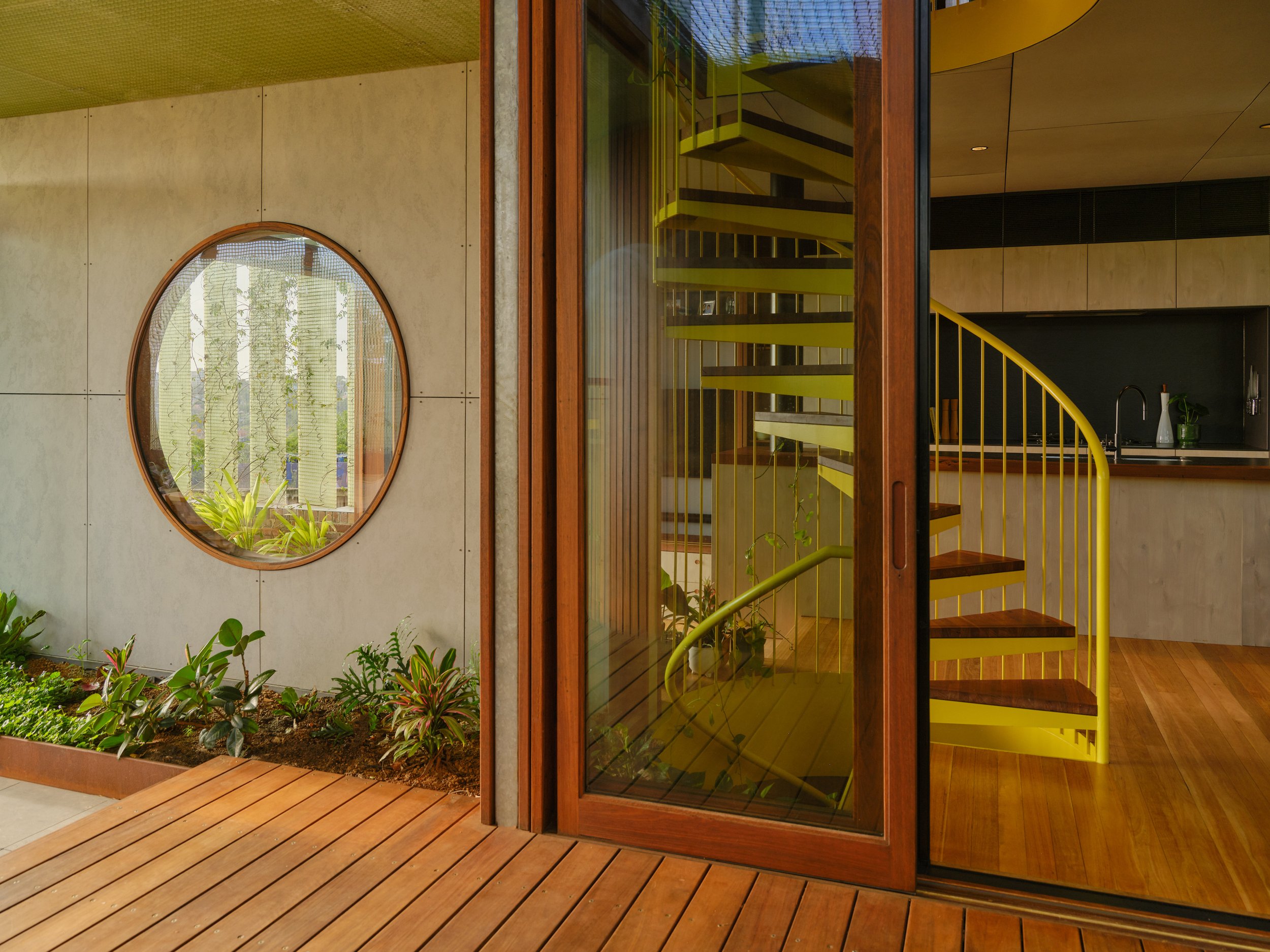
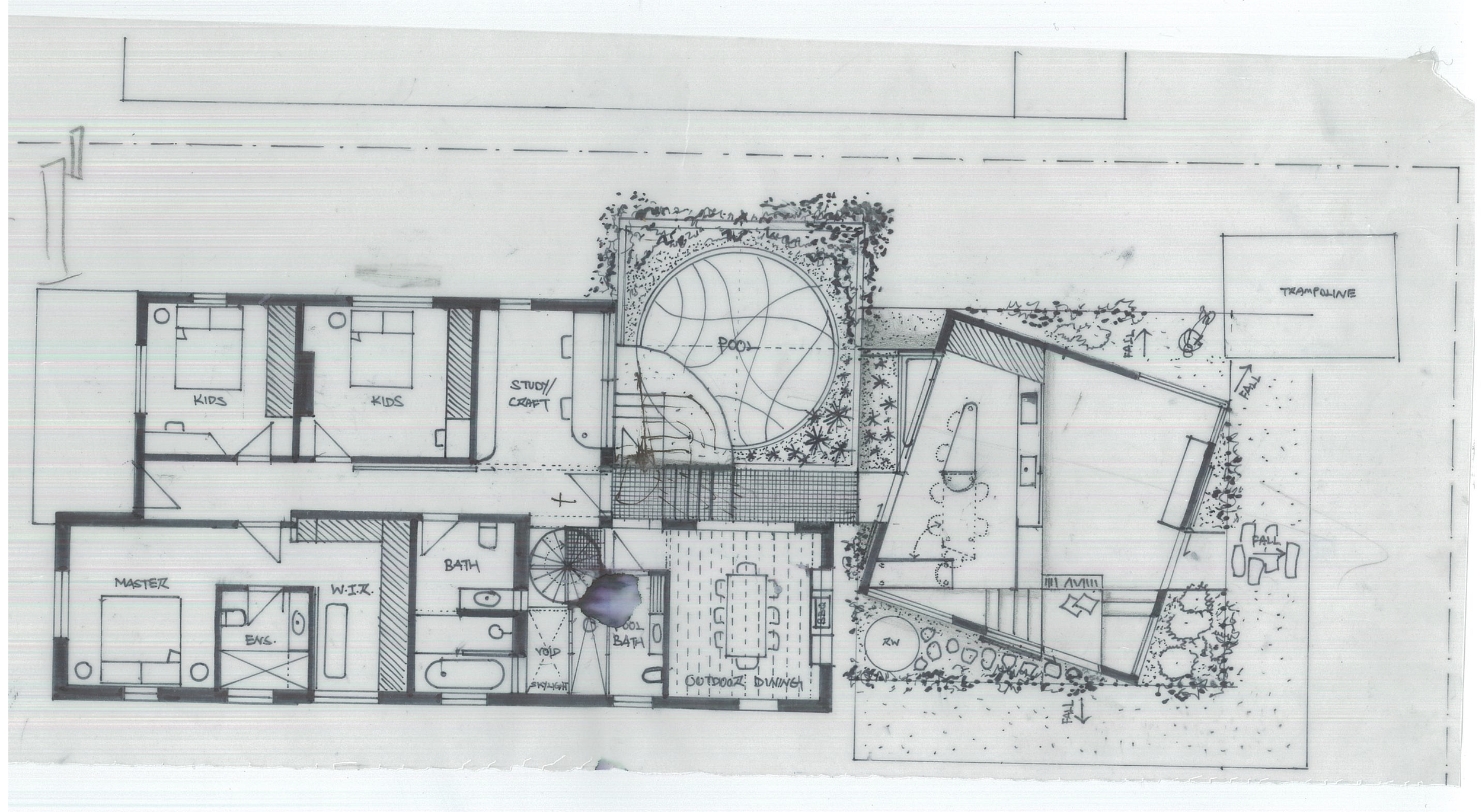
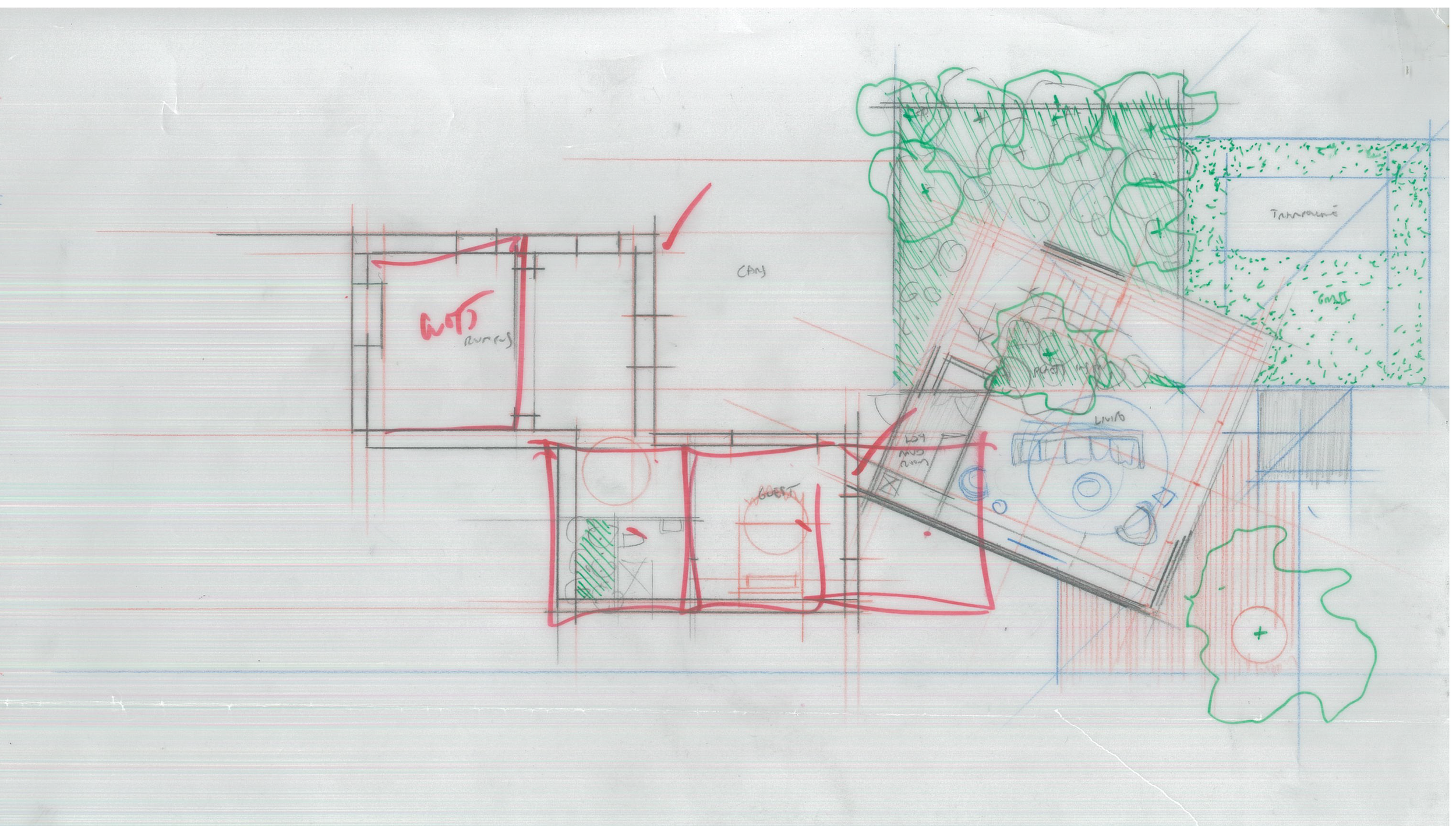
Circular forms are used throughout the design to emphasise balance, unity and oneness. These also soften and humanise the home’s disciplined architectural language. For example, the house’s bold and uncompromising curved façade has a delightful surprise: a large oculus bathes in sunlight the lap pool and all who enter. These circular forms are repeated in circular windows and roof openings, curved brickwork, the barrel-shaped custom mailbox, the kitchen bench, the spiral stair and bathroom tiles.
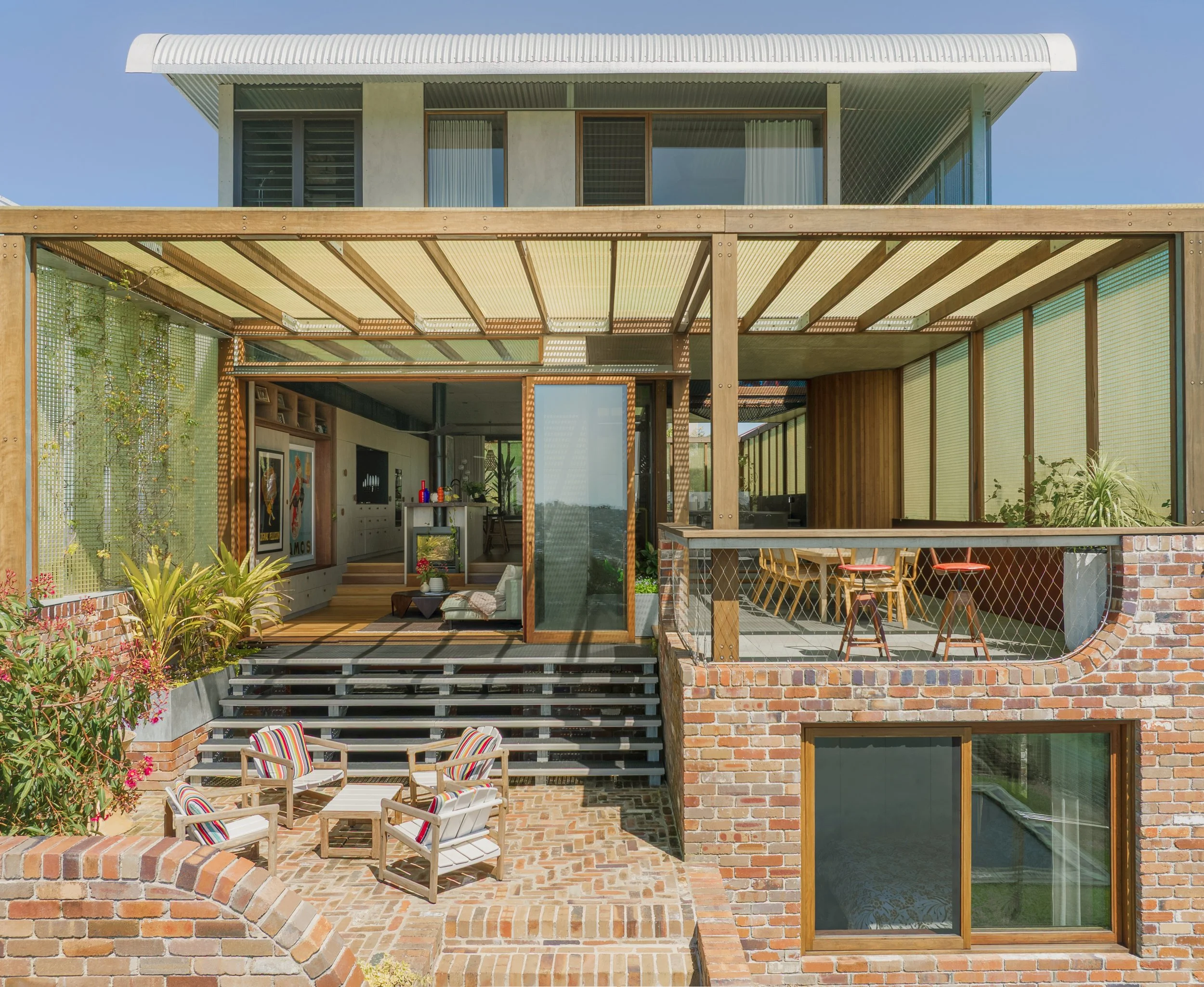
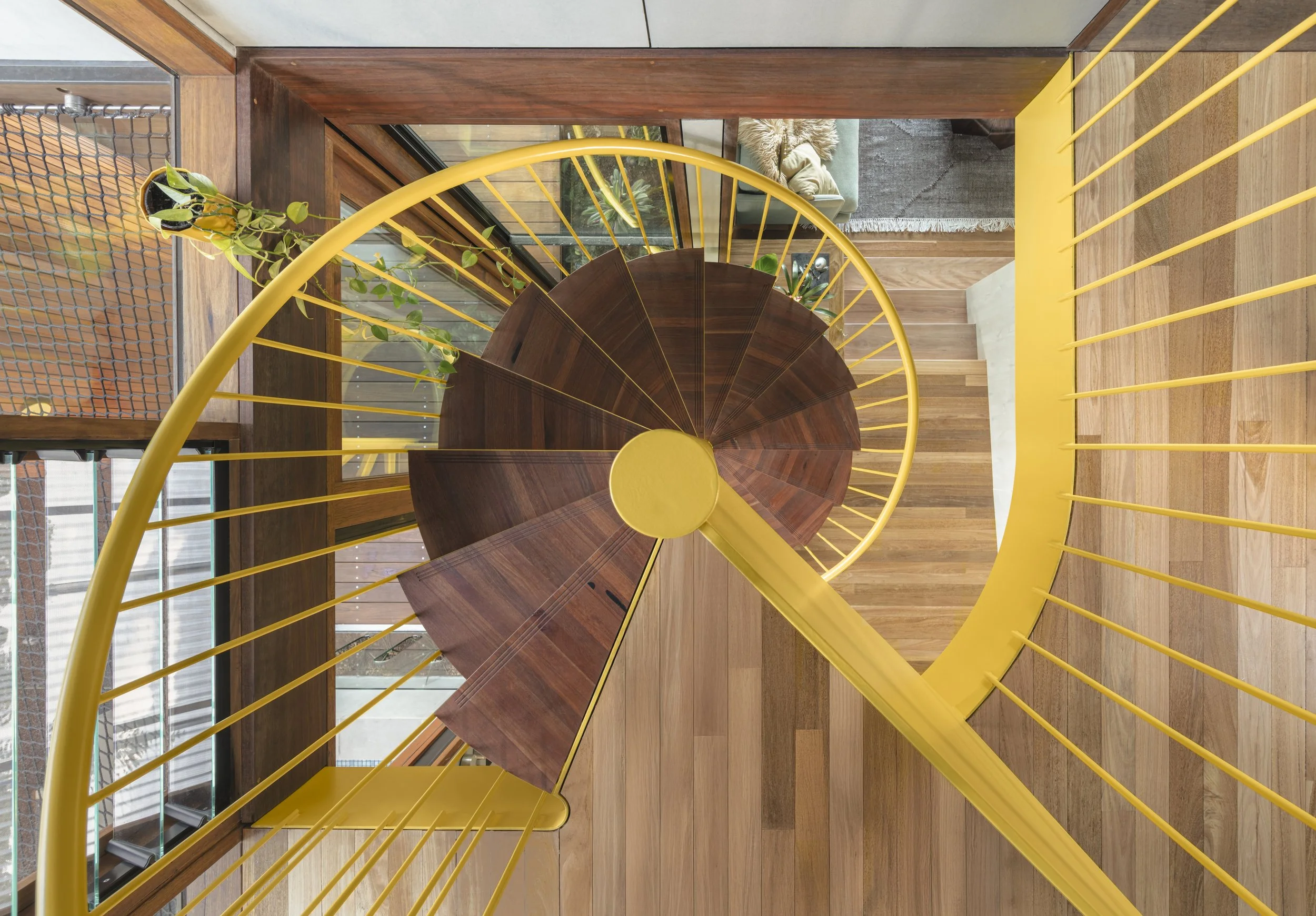
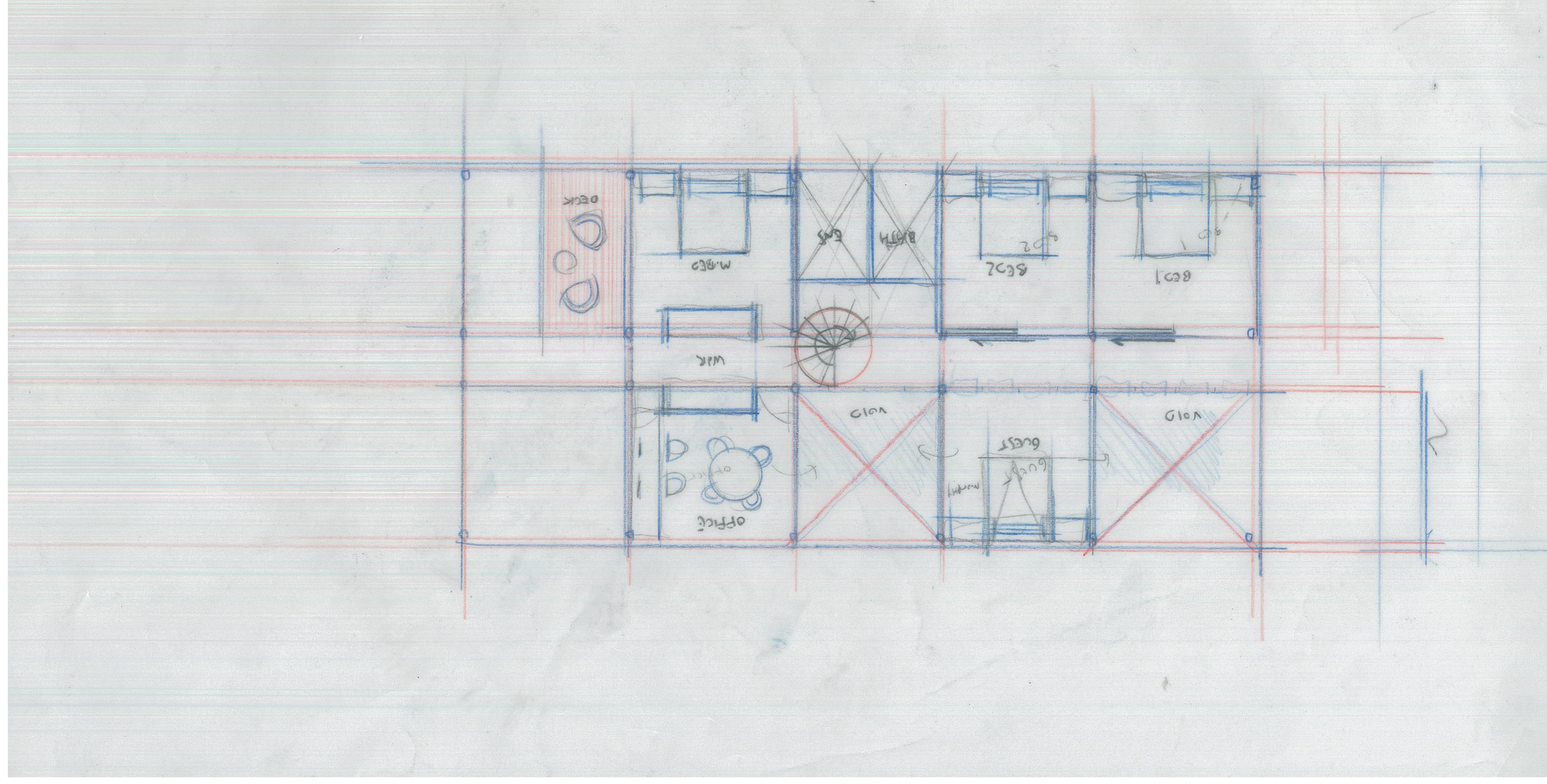
Unfolding to the rear down the steep slope, the multilevel four-bedroom, four-bathroom home draws in light and views to maximise sunlight all day. The pool runs almost the whole length of the flexible social living spaces, which culminate in two open air living spaces looking out to Quakers Hat Bay. A double-height spiral stair takes you up to the private spaces on the first floor – or downstairs to the practical lower ground floor with its guest room, storage room and two-car garage.
CplusC Managing Director and Principal Architect Clinton Cole says: “Designing Terabithia House was about wrangling opportunities and constraints. For example, the view is an opportunity, but height limits and privacy are constraints. The limitations really drove the form. Like with the roof – we couldn't turn it up any more or it would block the neighbours’ views. In holding space for polar opposites, the design carves out a retreat for the family to be together.”
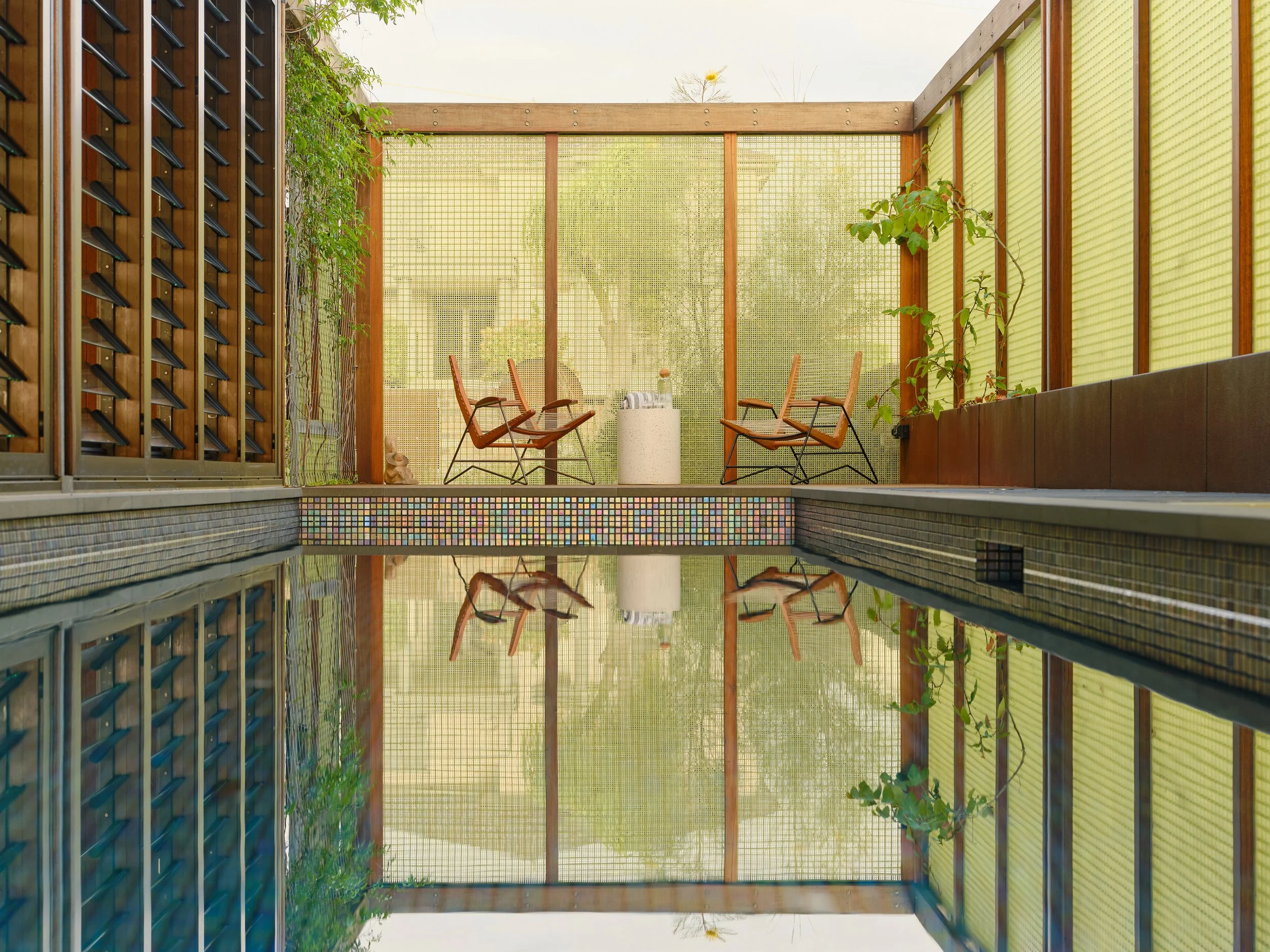
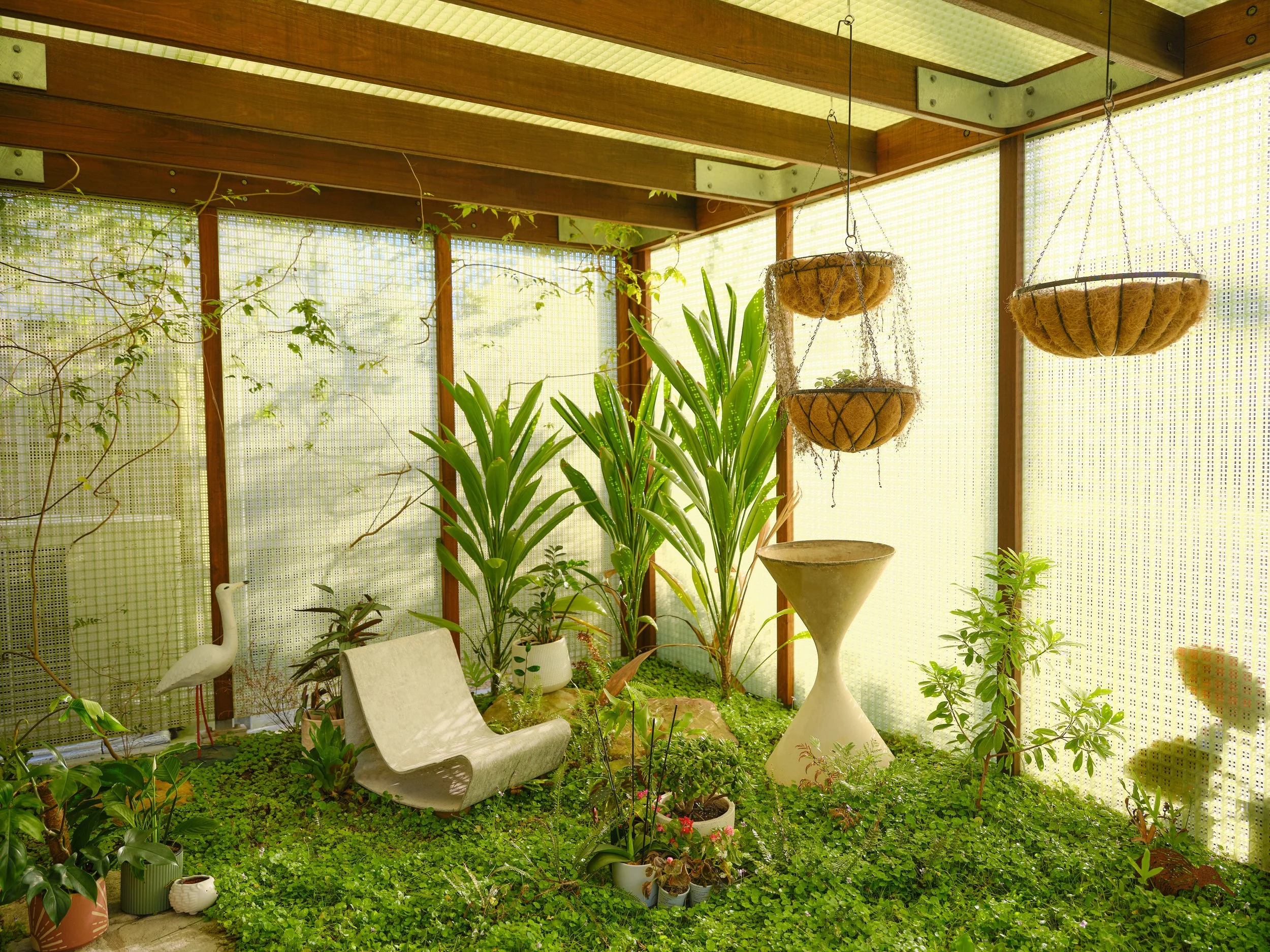
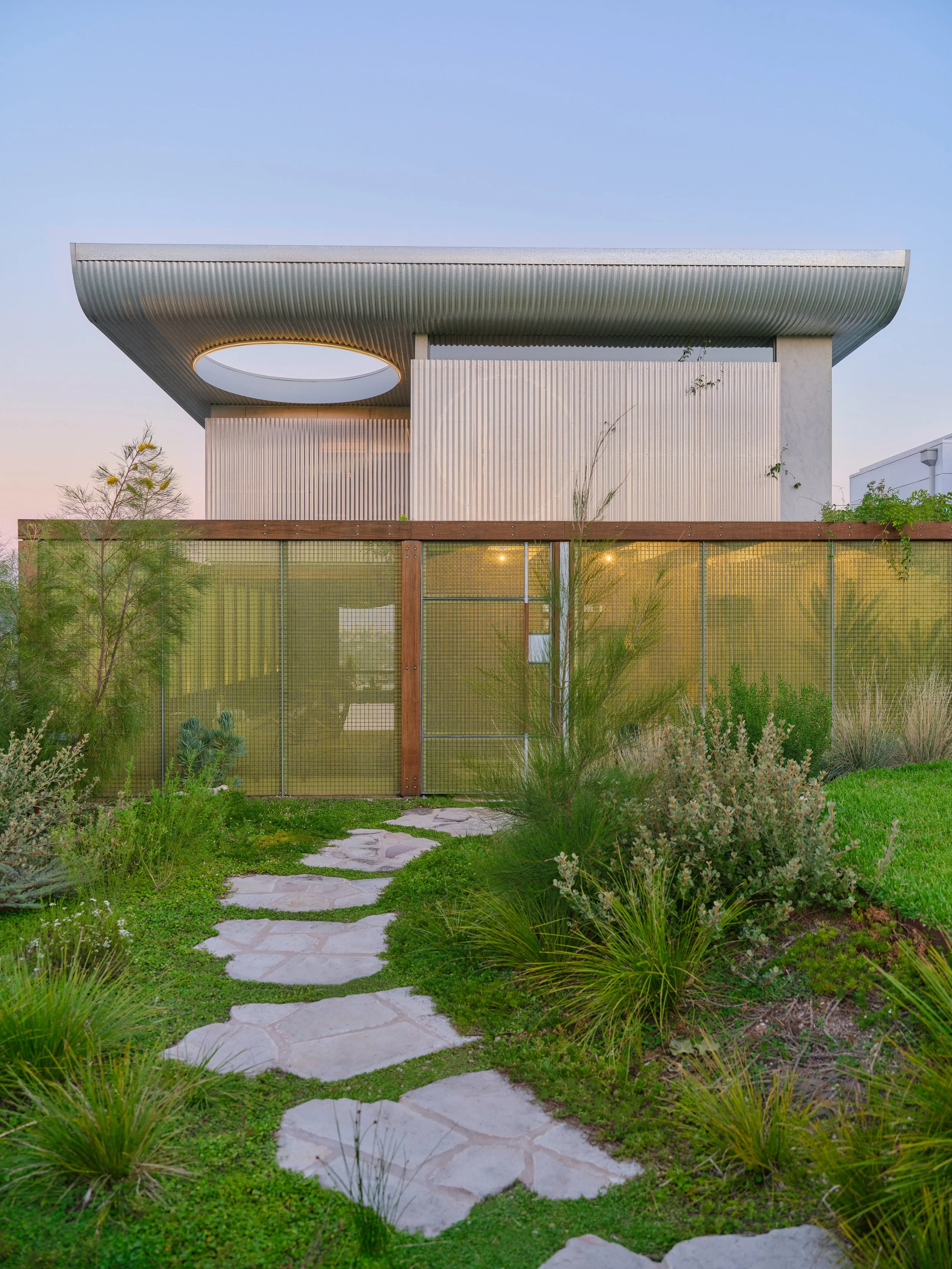
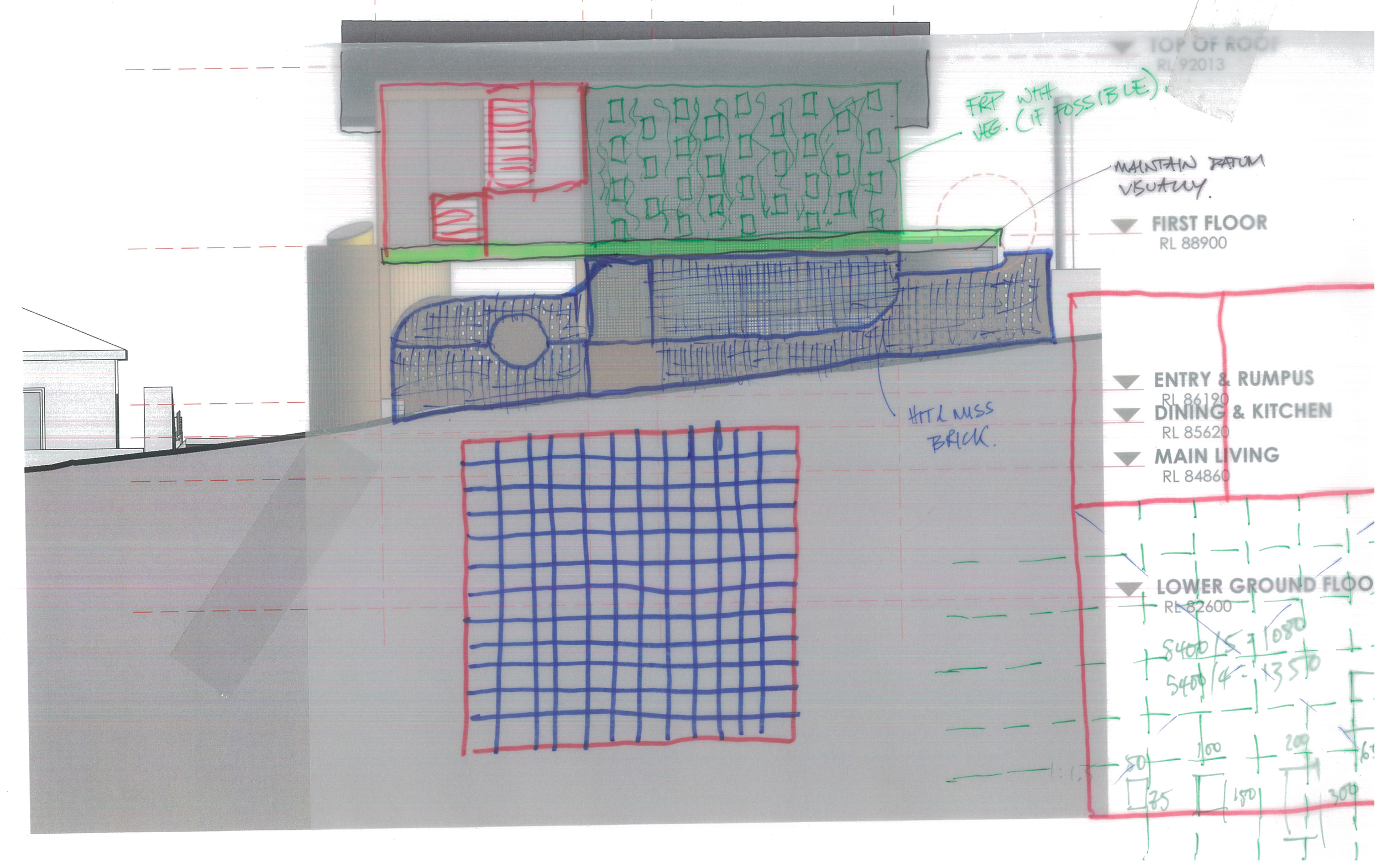
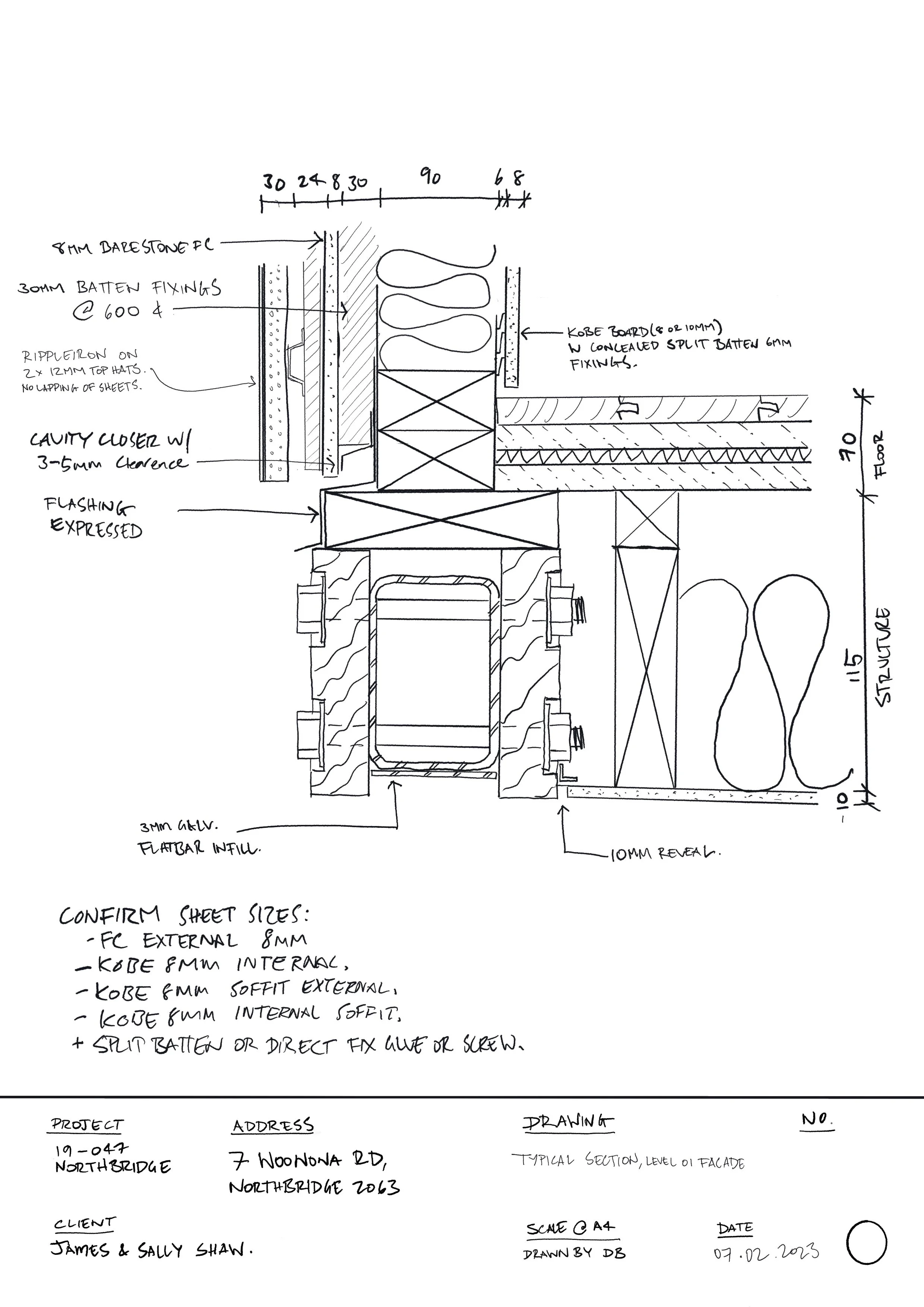
To address privacy concerns and manage overlooking from other properties, CplusC proposed lightweight fibre-reinforced plastic (FRP) screens along walkways and on the façade. These obscure the view from the street, screening the pool, living spaces and private spaces while allowing light and breezes to filter in freely.
The owners were enthusiastic about our proposal. “When CplusC shared their design for our home we loved how it let in the light. Having the pool close to the living areas made complete sense to us. And the kids loved the cargo net.” During construction, the design continued to evolve with changes and new ideas from the clients. For example, the laundry size was increased to accommodate a mudroom, and a fireplace was added to the kitchen.
CplusC Director and Senior Project Architect Hayden Co'burn says, “We always listen to our clients’ input. Sometimes it leads to our most iconic designs. As an integrated team of architects and builders, it’s easier for us than for a pure architecture or building firm to synthesise late-breaking ideas. We can bring together multidisciplinary expertise very quickly to implement them – or solve construction challenges.”
The interiors presented interesting challenges. Clinton says: “We had to figure out how to tie the broader identity and geometry of the project into the interiors without making it too complex or too much. We resolved this by using circular geometry in a restrained way – for example, with wood-turned handles and in the curve on the kitchen bench.”
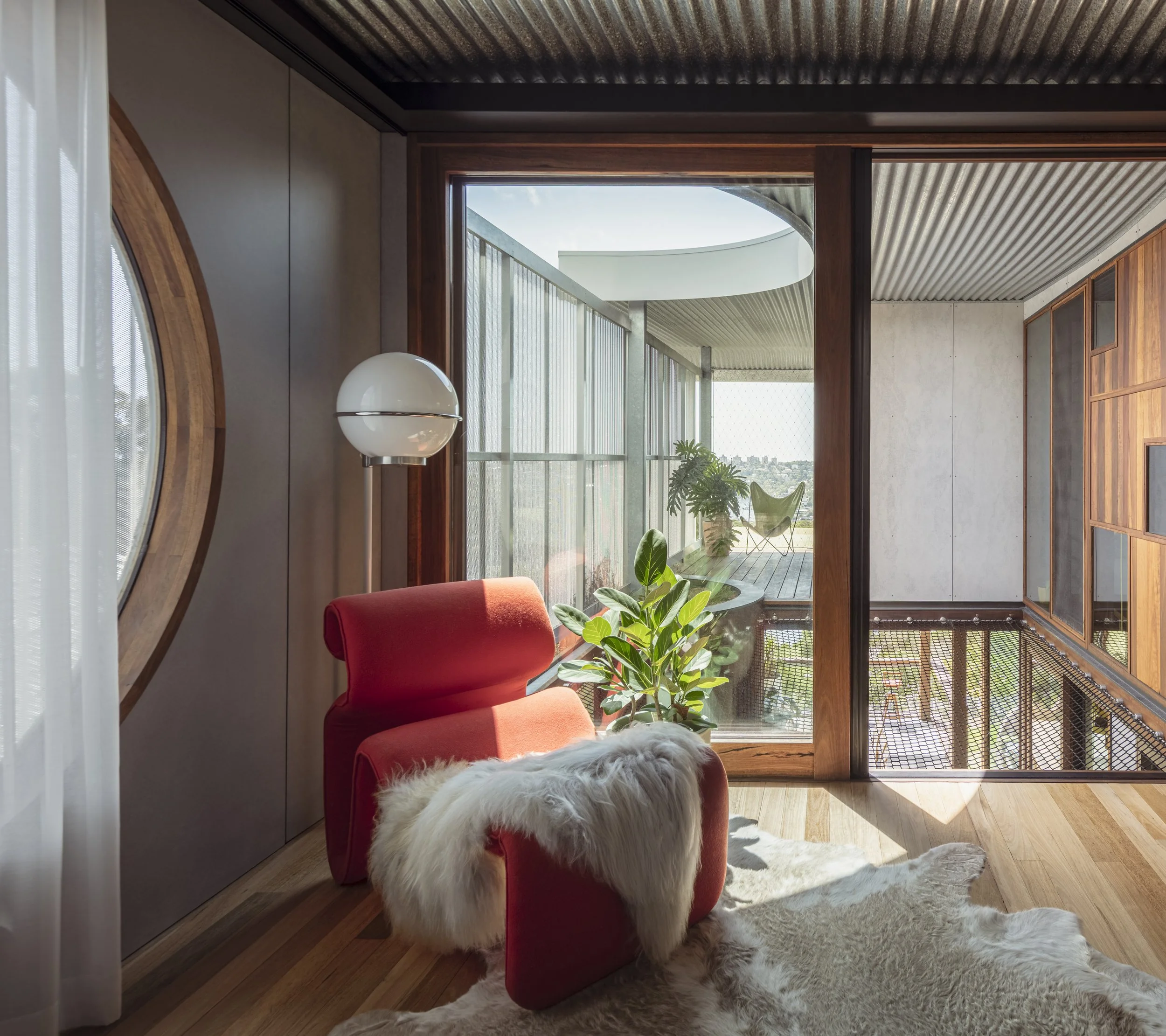
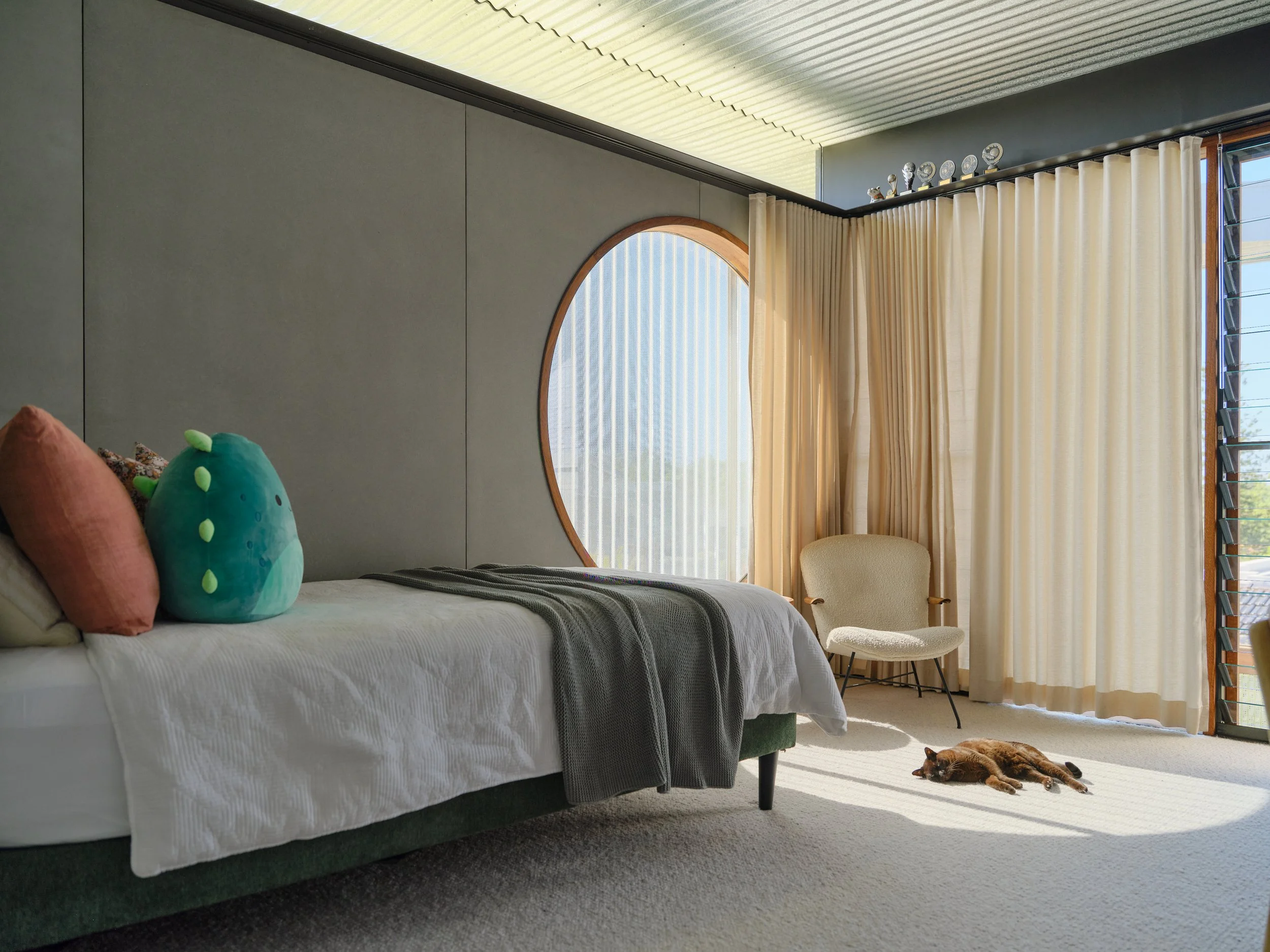
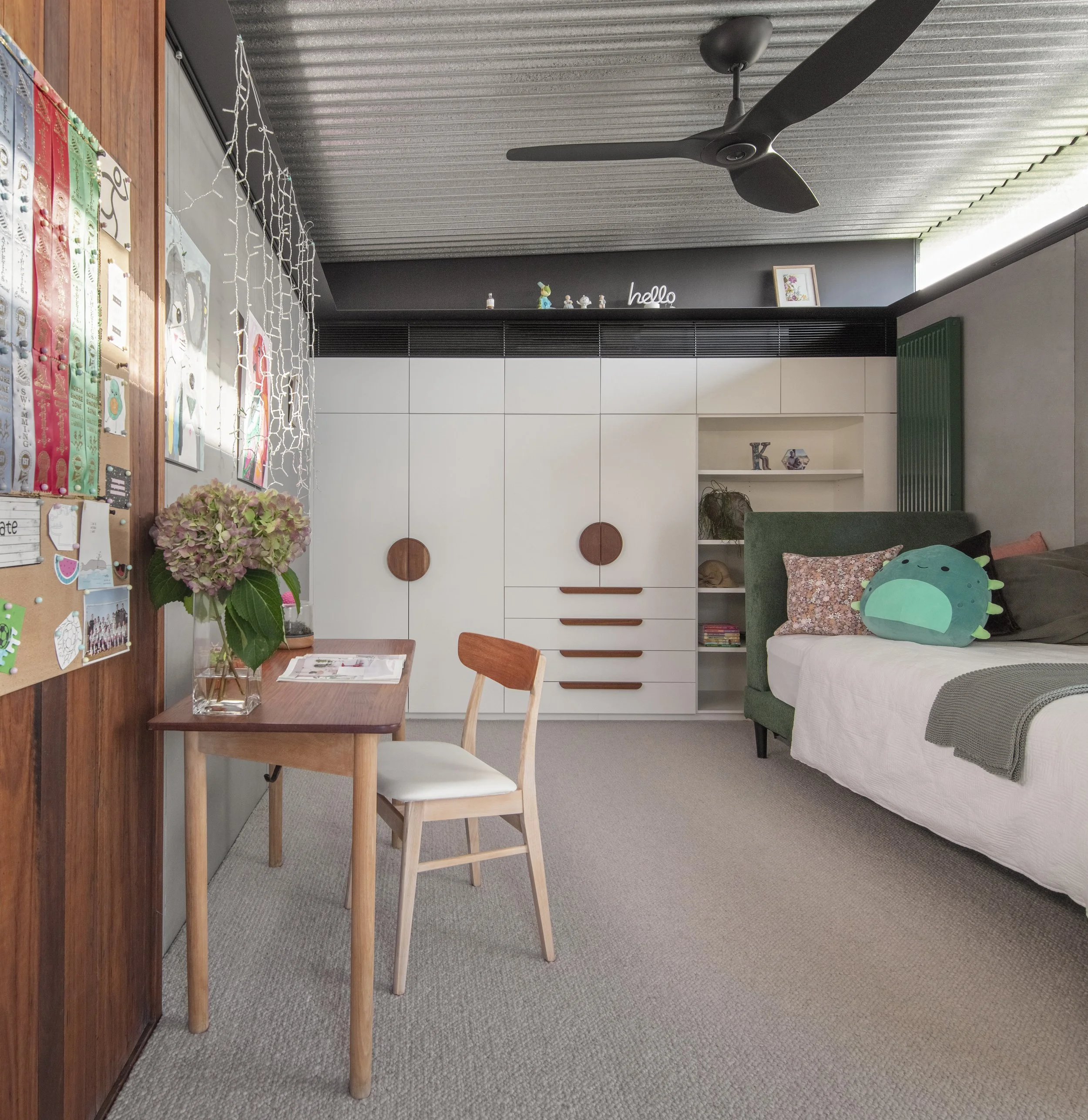
Another design challenge was placing lighting, curtains and hanging tracks for client artwork in first floor rooms, which had corrugated sheet metal ceilings. CplusC added steel plate projections along a fixed datum line below the butterfly roof so we could fix strip lights, curtains and art tracks on the walls instead of the ceilings.
The approvals
As part of our development approval documentation, CplusC provided a detailed analysis of the privacy and view impacts of Terabithia House on neighbouring properties. This showed clearly how the design complies carefully with local government height limits, allowing some areas of generous ceiling height while minimising view loss for neighbours.
Later, during construction, the clients asked CplusC to extend the laundry by adding a mudroom. Our integrated team of architects and planners accommodated this request and updated all construction documentation to reflect the changes.
The build
Construction ran from August 2022 to July 2024. Despite several challenges and some late-breaking changes to the design, Terabithia House was completed on time by CplusC’s team of master builders. The owners said: “Seeing our home materialise… really gave us joy. Every day the anticipation built until work was complete.”
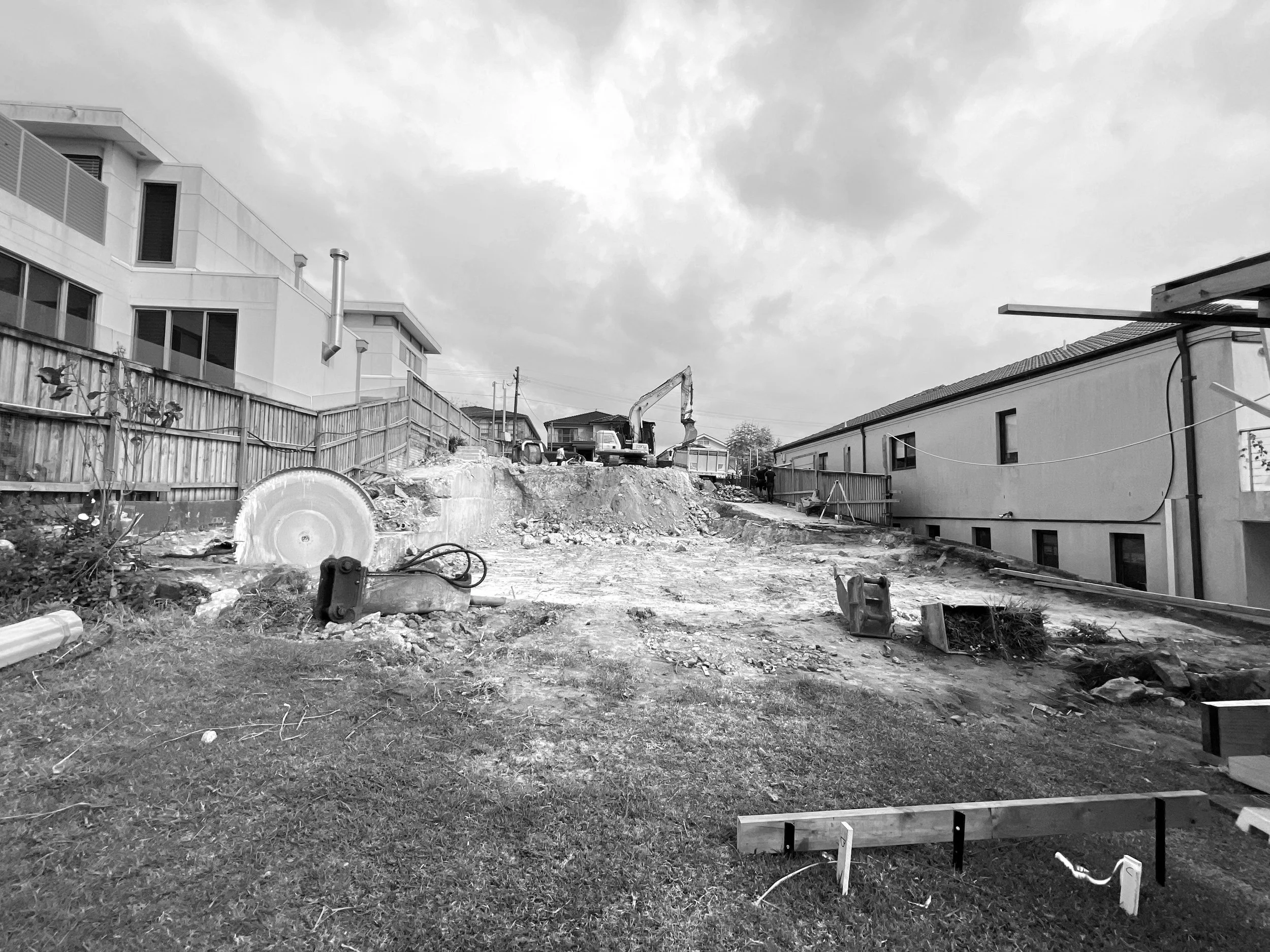
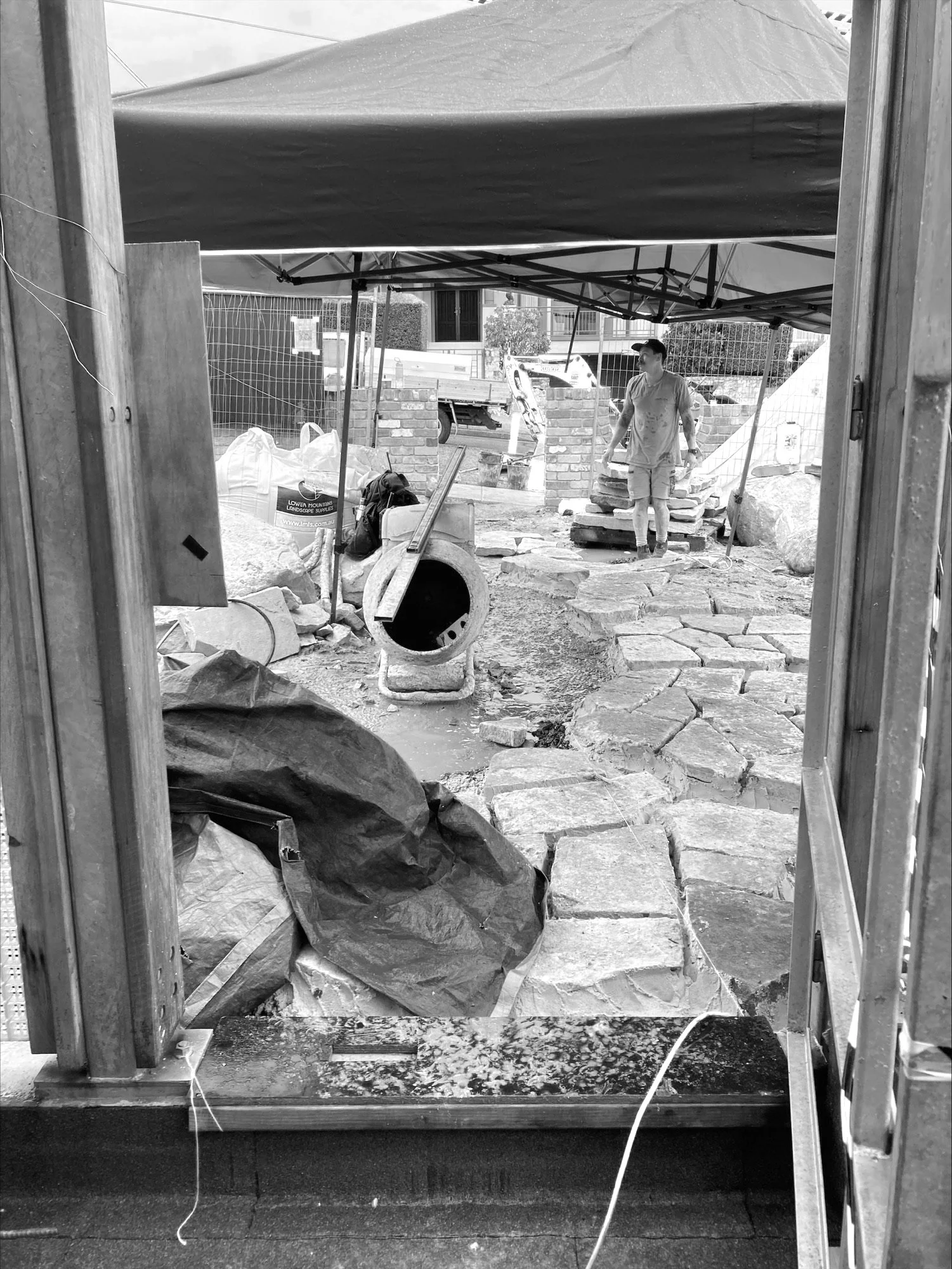
Before we could start, specialists removed asbestos in the existing building. Then the remaining structure was demolished. Next came the hard work of excavating the sandstone rock bed to create a level foundation for the new home’s footings. Unfortunately, the rock face was unstable, and a fissure formed in the excavated rock bed at the back of the plant room. CplusC remediated this by installing extra structural stabilisers.
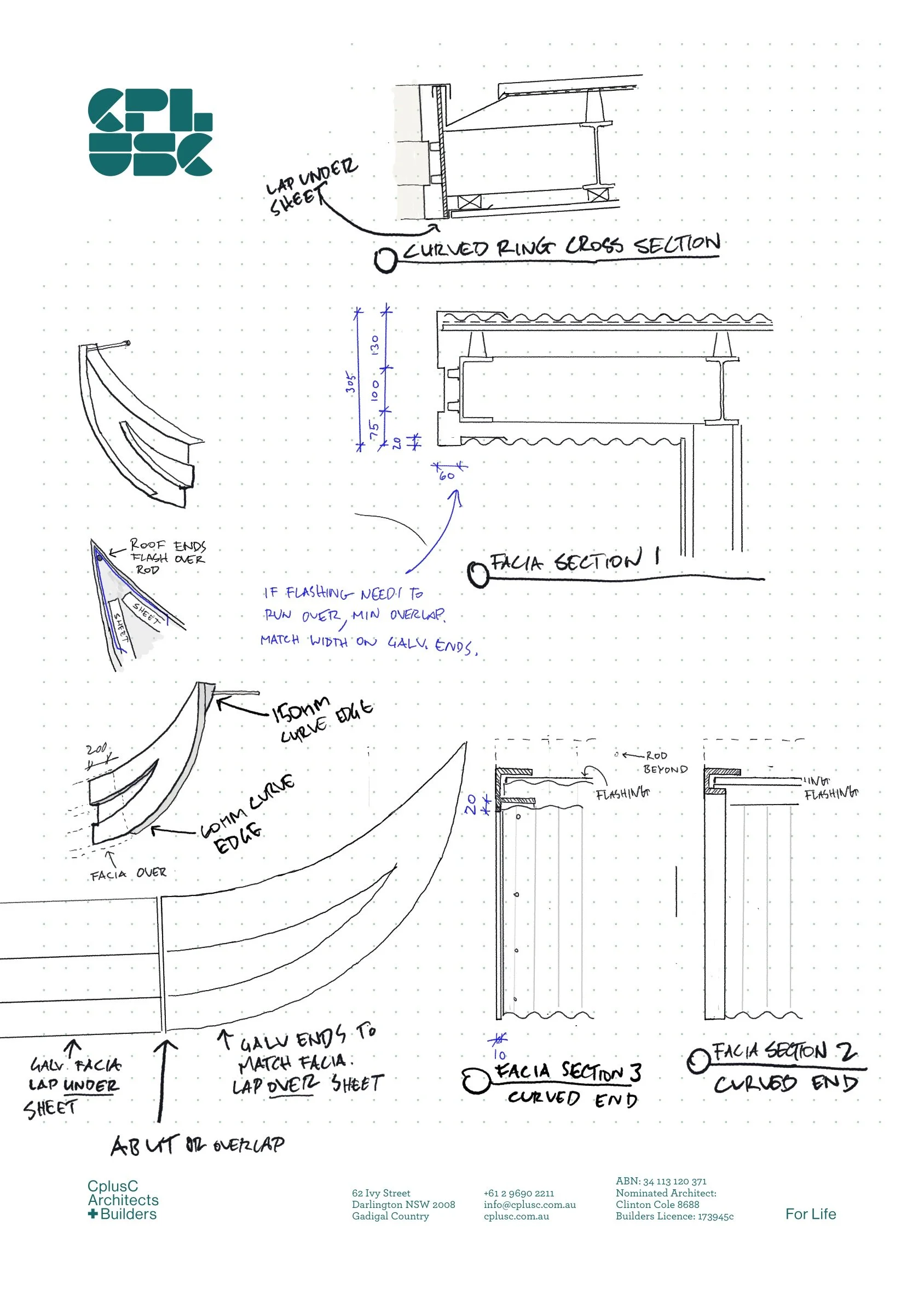
The design calls for considerable building artistry with many curved components that are notoriously complex to build. Big ticket features of the design like the compound curved roof, circular windows and the circular roof openings took particular skill. Flashings for the openings were difficult to fabricate and install and the roof flashing alone had to be prototyped multiple times to work through its mechanical restrictions.
Clinton says: “The butterfly roof was a learning experience. We came out the other side with a way better understanding of the limitations of folding sheet metal into three-dimensional curves.”
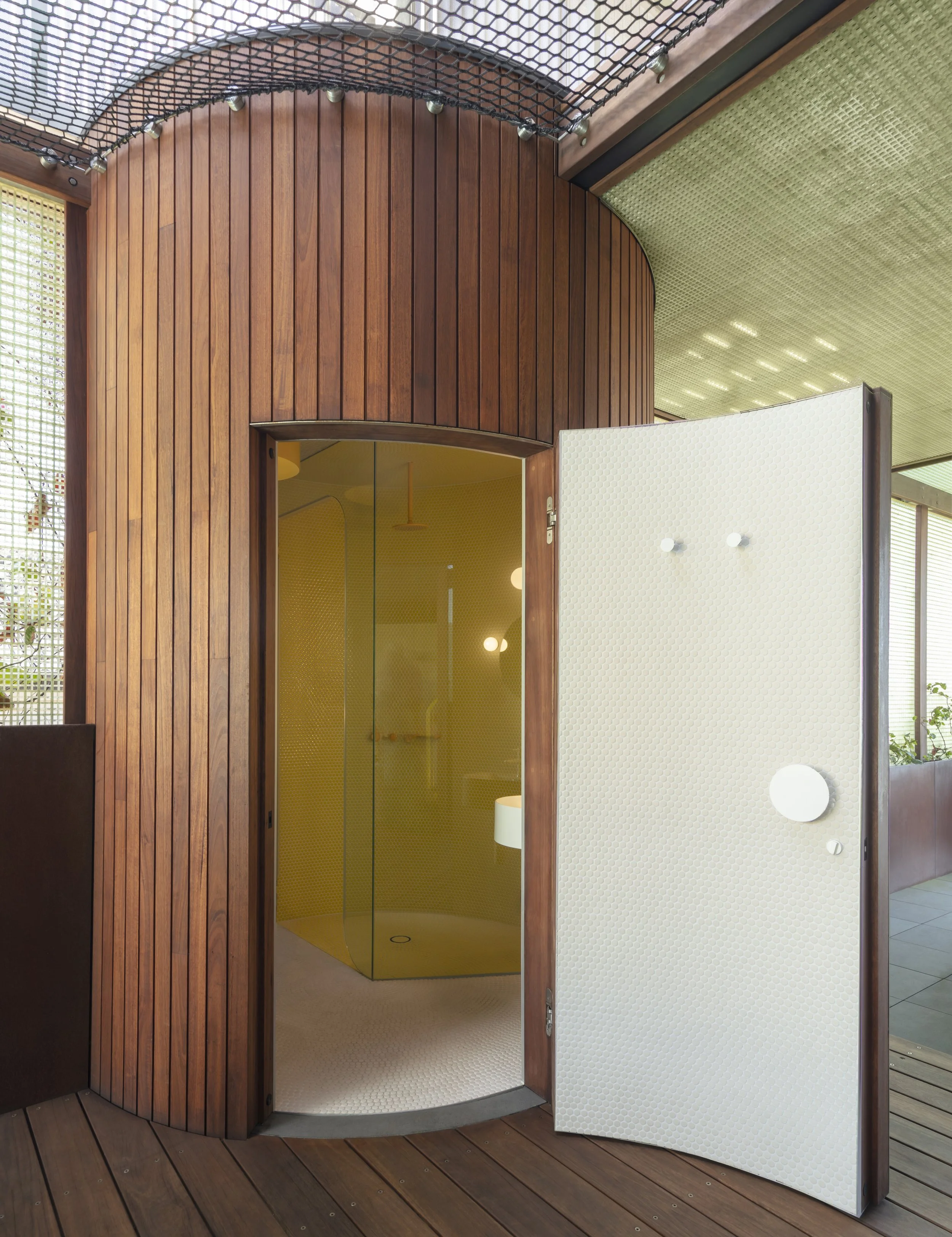
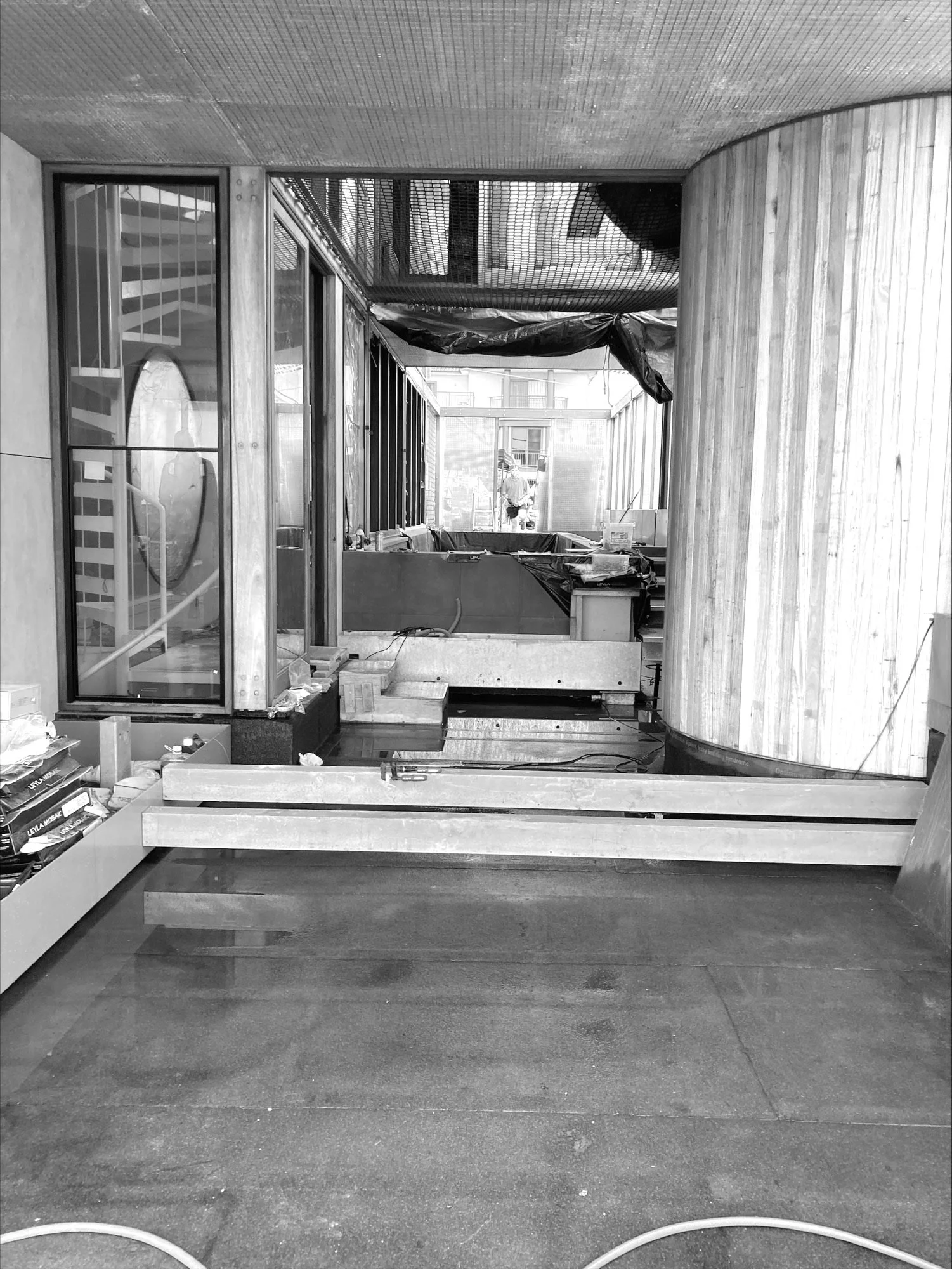
On a smaller scale, the curved door from the pool to the steam room was tricky. It weighed over 100 kilograms and was 180 millimetres thick with custom door hardware for a perfect seal. Poolside, it’s clad in timber. Inside, it’s tiled to blend with the steam room walls. Our builders took considerable care to make it easy to open and close and immaculately finished the joins for a ‘secret door’ effect. The steam shower inside had complex performance impacts on cabinets, light fixtures, toilet rolls and skylights from steam. All these had to be thought through carefully to ensure a beautiful and functional result that would stand the test of time.
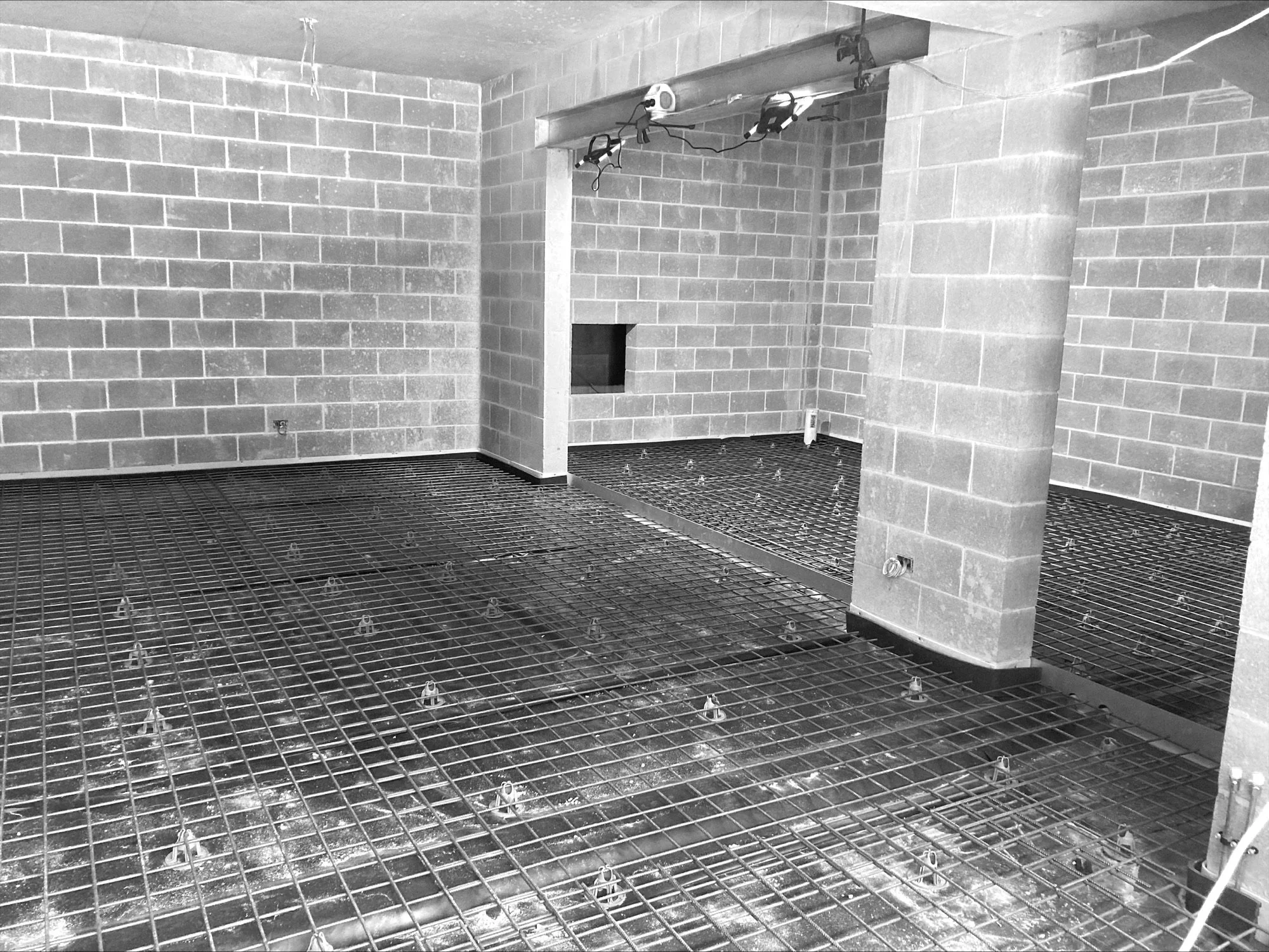
The client requested changes to the design during construction. We accommodated a request to park a car in the plant room during the build by doing a rapid feasibility study then cutting an opening in the blockwork wall and supporting it with a steel beam. We were also able to add a fireplace in the living space by building out a wall in the bathroom above to accommodate the flue.
Our integrated team of architects and builders had many more challenges to solve during construction – like relocating the heat pump equipment when it proved too large for the plant room; making sure the pool shell could structurally withstand the water pressure from swim jets; building out walls and moving steel framing to create more space between door and wall elements to accommodate flyscreens; and adding a steel angle fixed structure to support highlight glazing over a door. When a recycled timber benchtop didn’t match the final bench design, our artisans made it work by slicing it into sections, reshuffling them and attaching the same timbers in a different order. Several curtains required creative configurations and track types so they could stack into compressed storage cavities.
The use of FRP presented additional work navigating bushfire and fall prevention compliance but our team worked diligently to get it across the line. And during the occupation certificate application, the certifier raised an eleventh-hour compliance concern that saw us demolishing and rebuilding a recycled brick fence just in time for the family to move into their new home.
“We’d been there every other week during the build so we had a fair idea what our finished home would be like. But it was still a revelation seeing it at handover. There was a huge sense of space.”
–Owner
The Result
An eye in the sky
Terabithia House is monumental yet playful. A distinctive butterfly-shaped roof made of hot dip corrugated sheet metal curves dramatically toward the street and up into the sky. An oculus cut into it opens cheekily like an eye, looking down on the pool below. Translucent jade-green fibre-reinforced plastic (FRP) screens shield the understated façade for privacy.
Clinton says: “Circular geometry always calls me. Circles are beautiful and rational. They bring balance and lightness to hard materials like brick and steel, and make muscular forms feel more open and human. Here, the oculus in the sky makes you look up. It also draws light into the pool.”
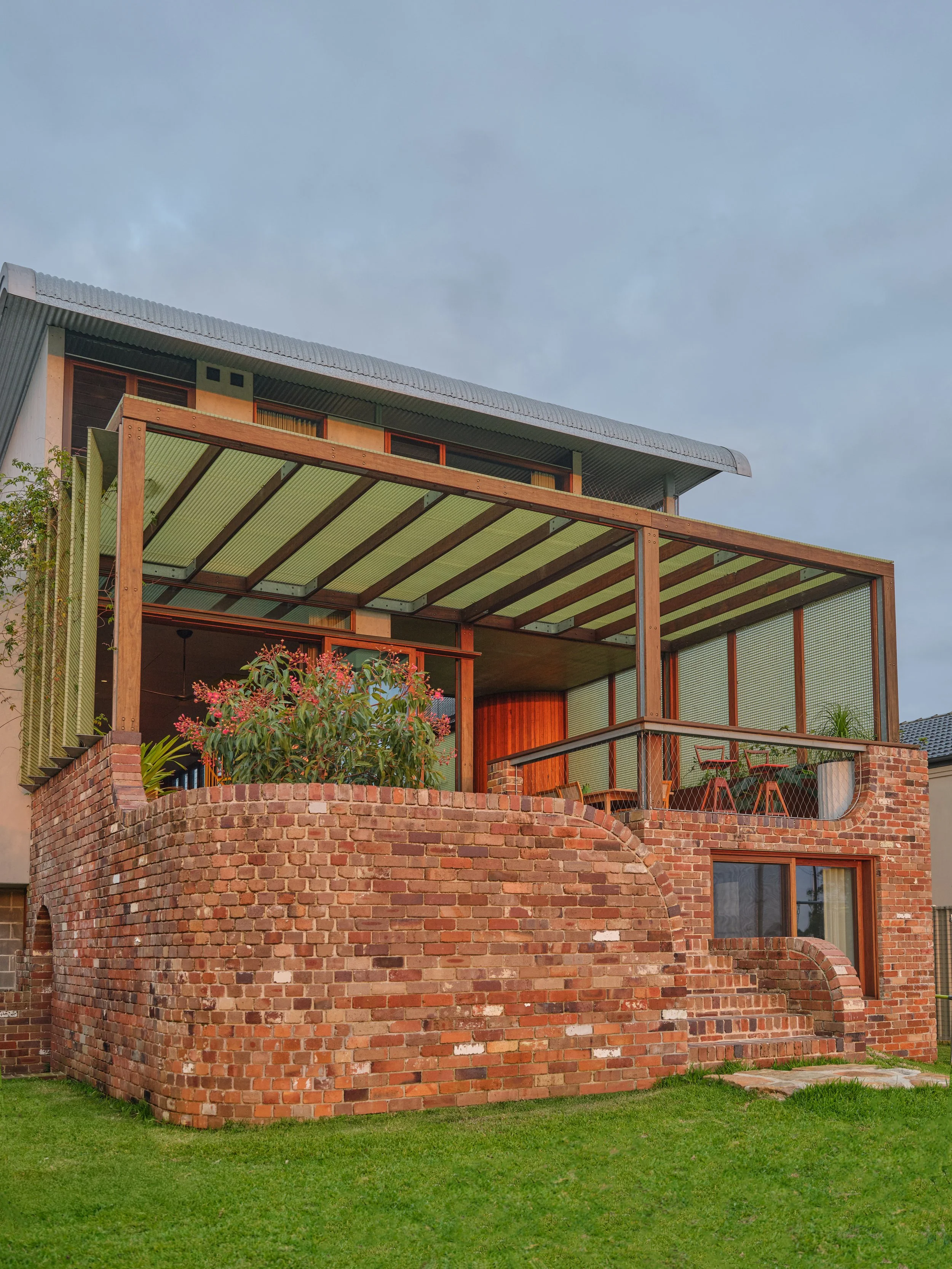
On the brick wall facing the street, a barrel-shaped steel letterbox picks up the circular geometry. The wall wraps around the base of the house on the driveway side, its graceful arches and round and corbelled openings highlighting the beautiful patina of the recycled dry-pressed bricks and continuing the home’s curving visual signature.
At night, the house comes to life under LED lighting. Subtle patterns from the perforated FRP screens and the leafy silhouettes of plants ripple over the corrugated metal exterior, reflecting on the pool and into the home.
Inside…
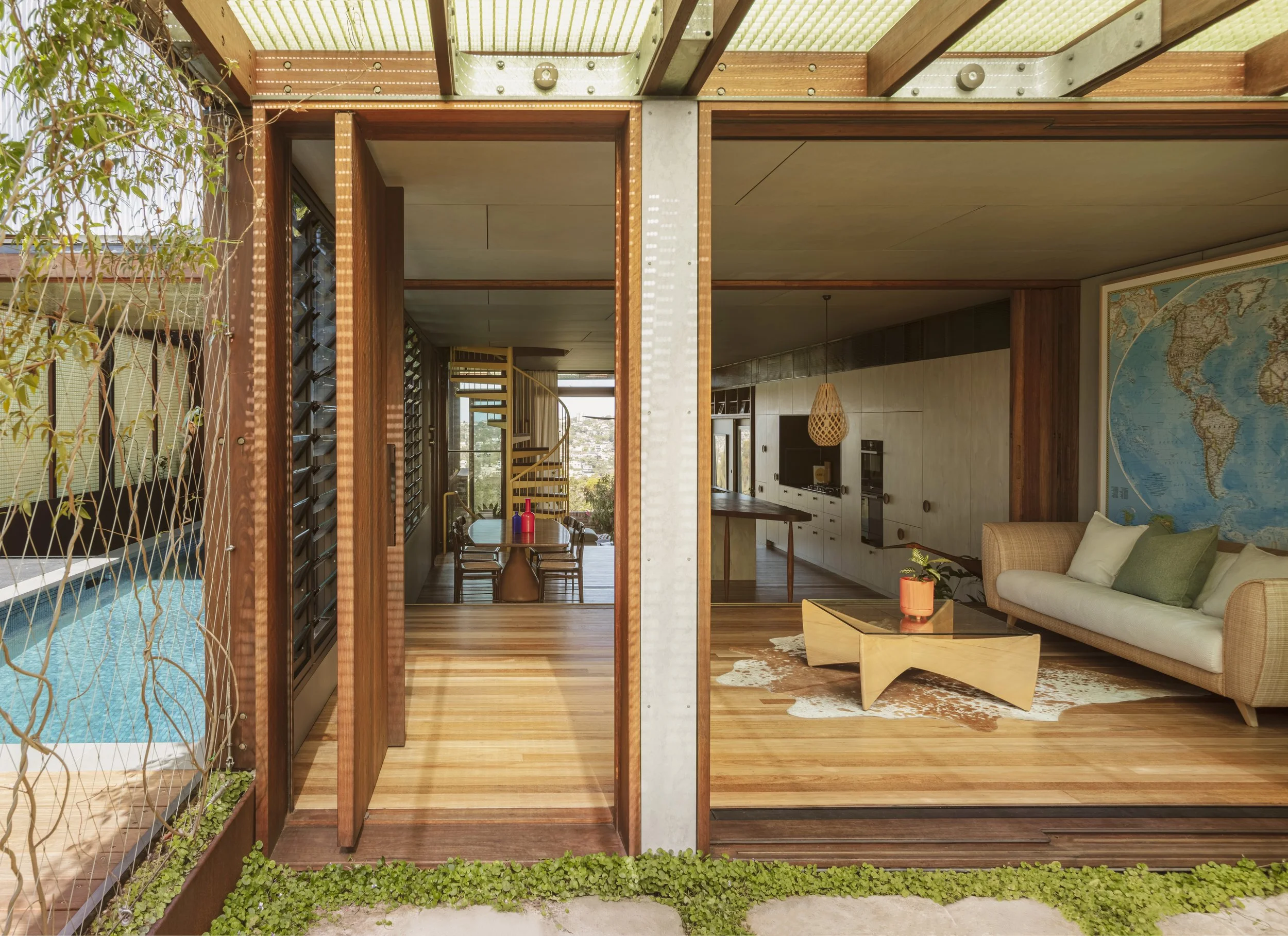
Entering the ground floor, you drink in the glorious views as you move easily through light-filled living spaces flowing down the sloping site. To your left is the pool, separated by glass louvres and throwing dappled light inside. Oversize wooden sliding doors allow separation between the upper and lower living areas. The owners were delighted with the result, saying: “We’d been there every other week during the build so we had a fair idea what our finished home would be like. But it was still a revelation seeing it at handover. There was a huge sense of space.”
Inner and outer living
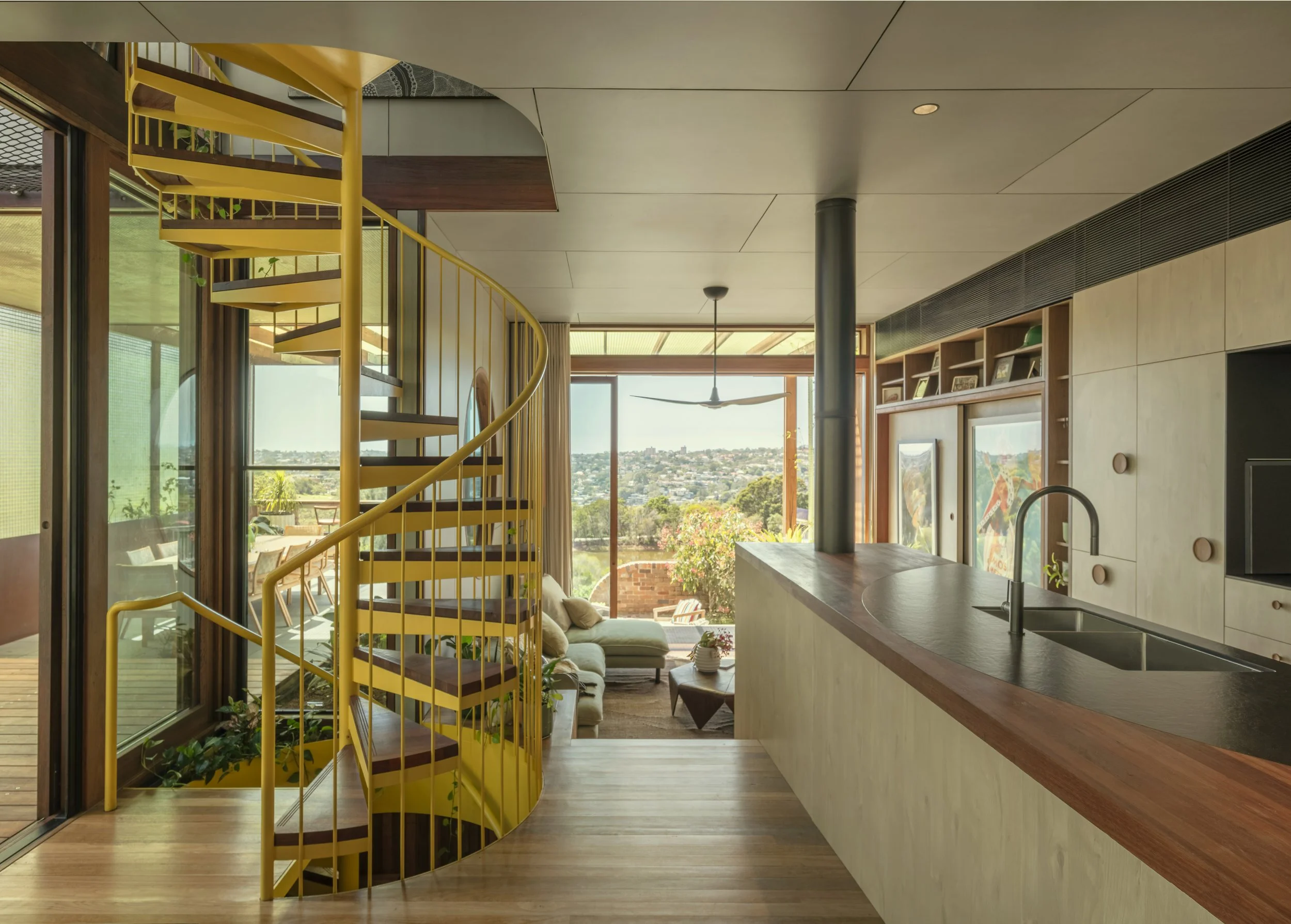
In the communal kitchen and dining area, the family gathers to chat, enjoy the view and prepare meals from the well-stocked walk-in pantry. “Now we’ve had a chance to live here, it’s starting to feel like home,” they say. “We love the space and light… Everything’s easy – just like we imagined it.”
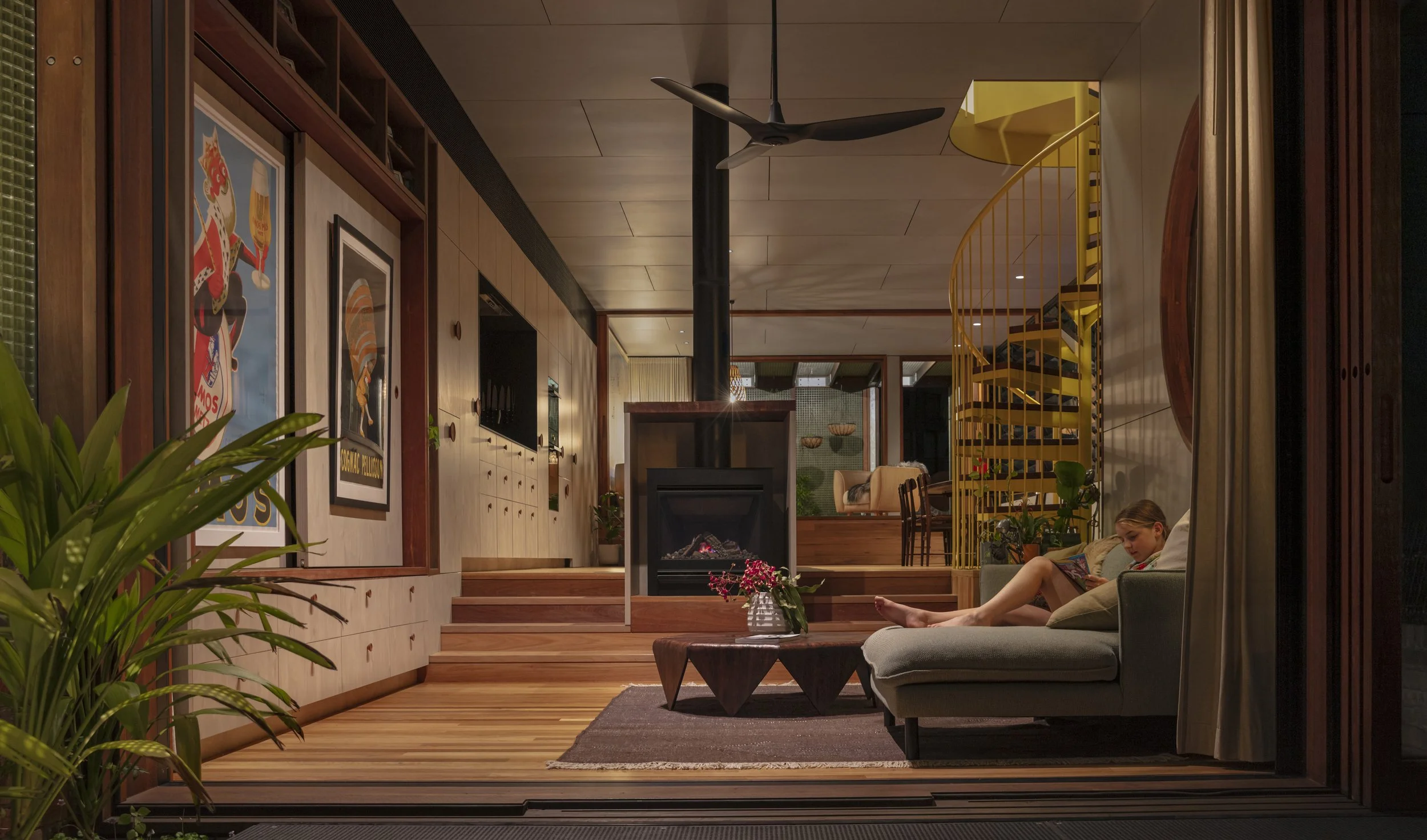
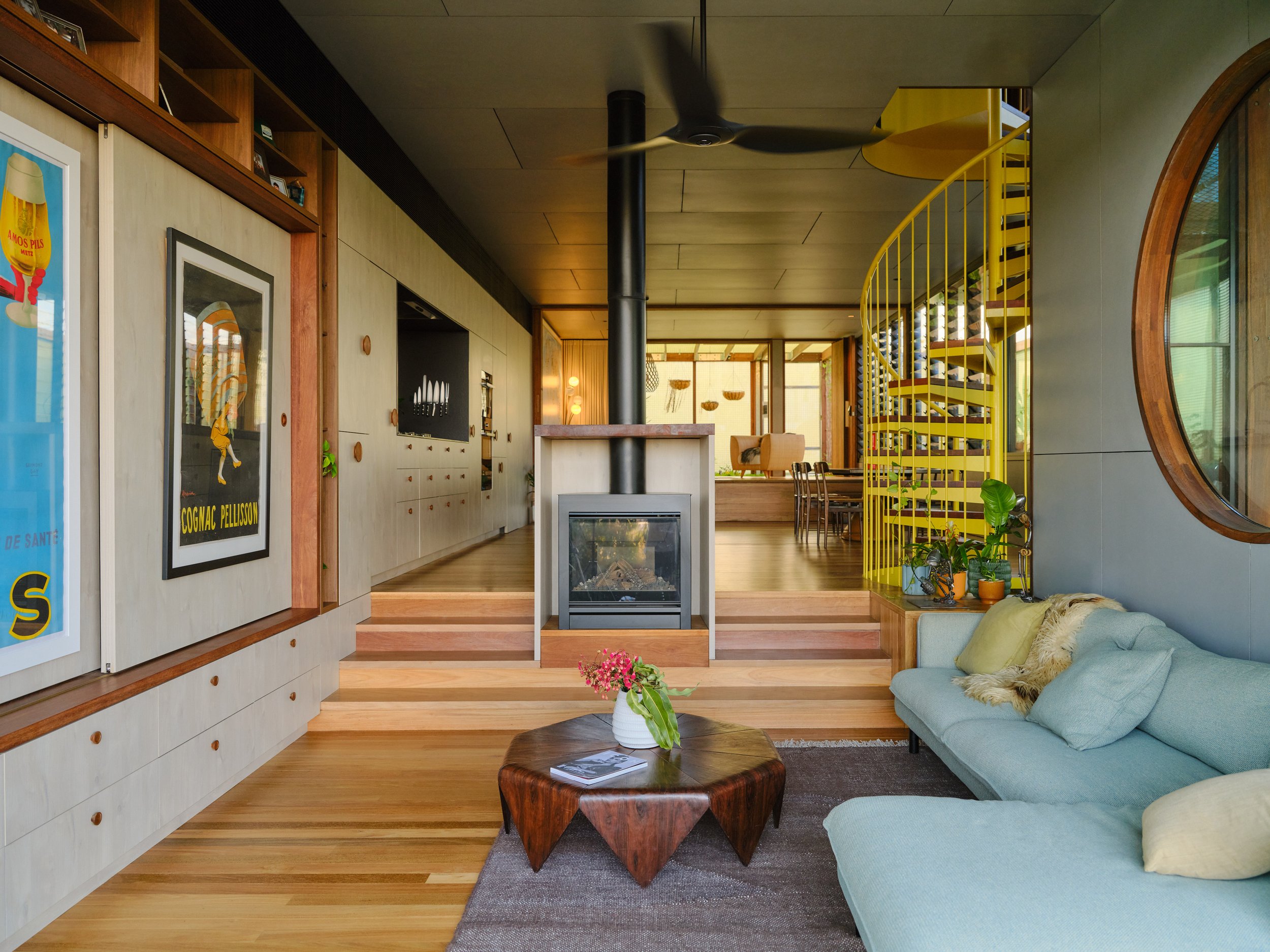
Stepping down to the main living space, they’re warmed in the cooler months by the convivial flames of a wood stove and hydronic in-floor heating. The beautiful wooden cabinets feature custom lathe-turned timber handles and sliding panels to display artwork and conceal the TV when not in use. The kitchen and lower living space both give onto covered outdoor living and dining spaces.
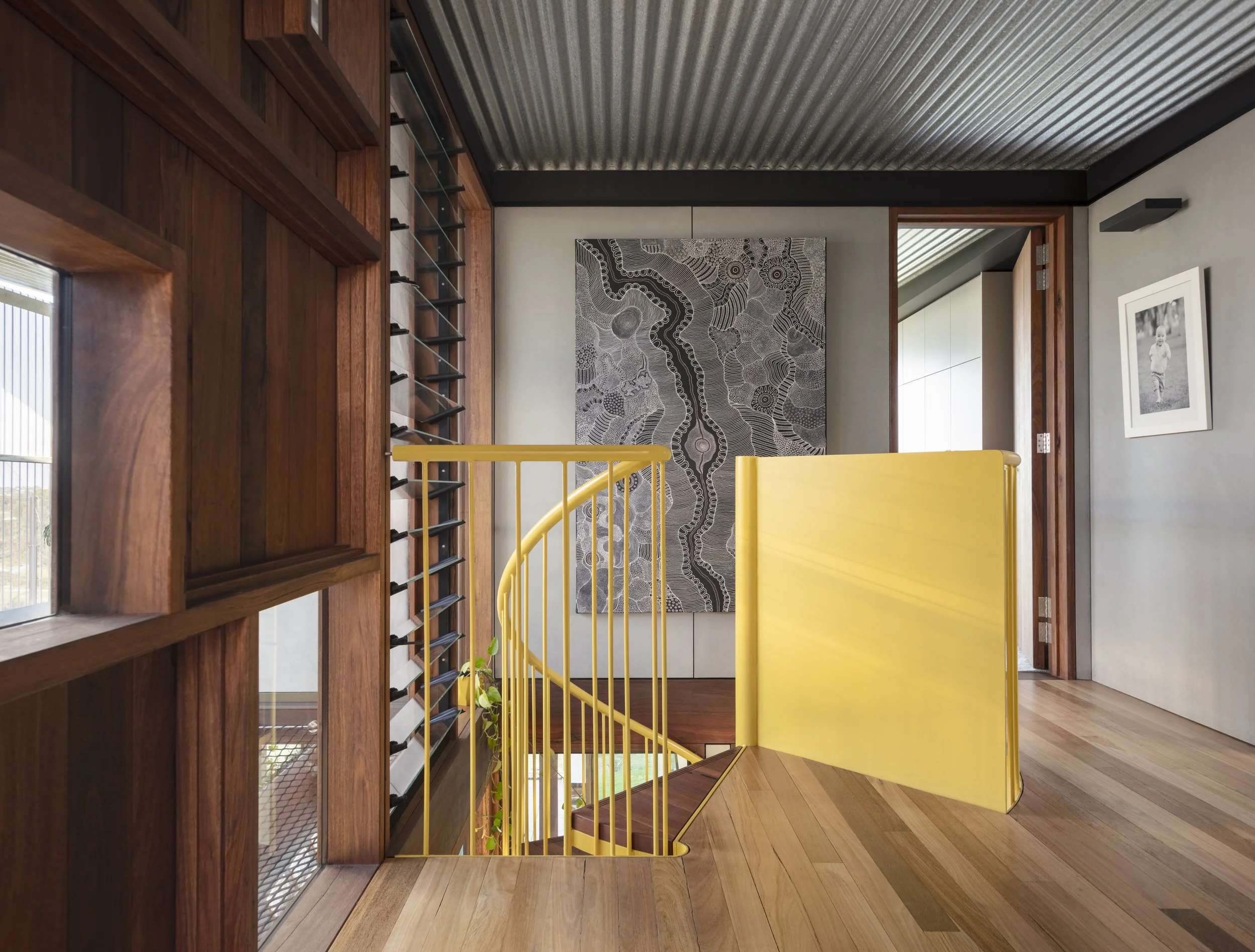
The home’s signature curves are imprinted in a large circular window and picked up again on the 5.8-metre laminated recycled hardwood benchtop, which features a semicircular wet zone made of Dekton. And of course they’re breathtakingly incarnated in the bright yellow triple-height spiral stair, which coils up to the private spaces on the first floor above and down to the functional zone on the lower ground floor. Welded onsite, the stair features recycled timber treads individually shaped to its steel skeleton. The pop of yellow infuses the industrial aesthetic with fun.
The pool
Water is part of the living spaces with the raised 10-metre lap pool running almost the full length of the house. Sparkling under the oculus and two semi-circular roof cutouts, it’s finished in reflective tiles. By reflecting northern light into the living areas, it adds to the natural lighting throughout the home. At night, the curved openings glow with strip lighting and the oculus hangs like a halo over the pool – a swimmer looking up sees a ring of light above, framing the sky and making the roof look like it might float up and away.
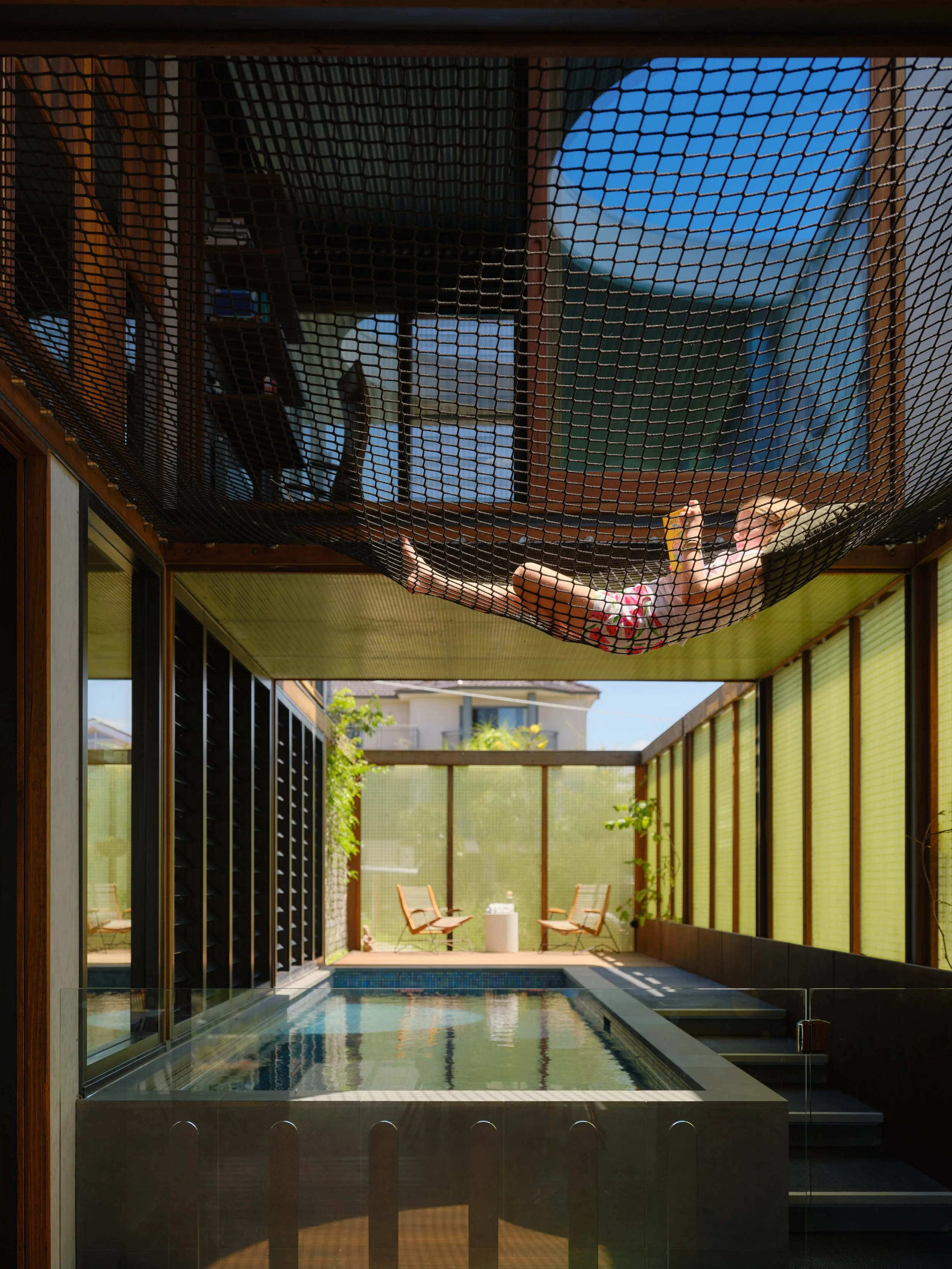
The translucent FRP screens surrounding the pool’s outdoor borders are permeable. They let in light and air, creating a natural space to exercise, relax and cool off on a hot day. Over time, they’ll support vines, blurring visibility from outside even more. Because the pool is integrated with the living spaces, it’s easier for parents to keep an eye on kids from inside.
A secret steam room
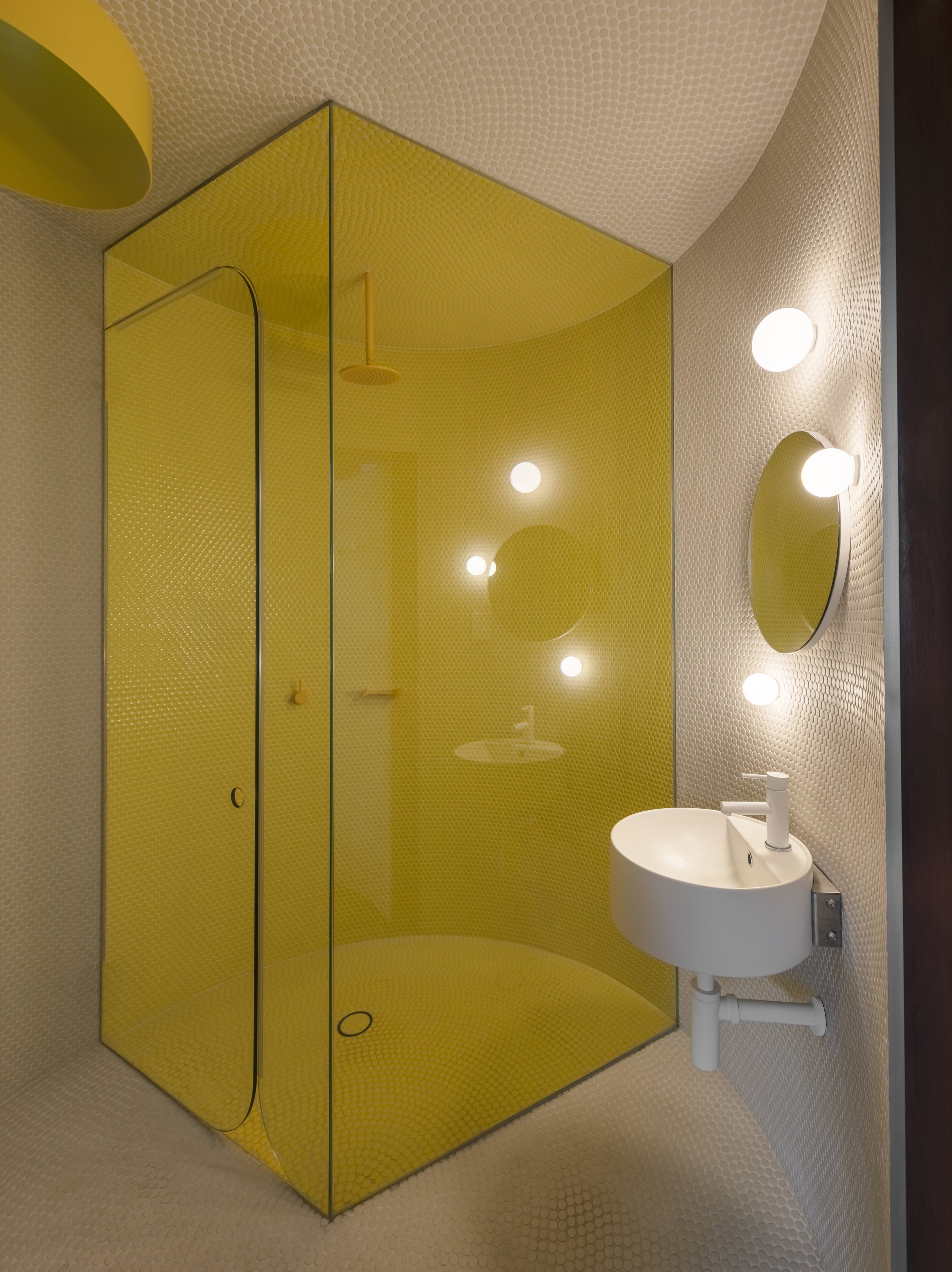
At the rear of the pool, a concealed door opens to a cylindrical steam room hidden in a curved timber popout on the side of the house. This fun little private pod is tiled in colour-blocked yellow and white penny round tiles. A bright yellow steam shower looks down from the ceiling. The circular theme is wittily elaborated with a round mirror, orb lights and a circular glass oculus bringing in light via a sky tube in the ceiling.
Upstairs
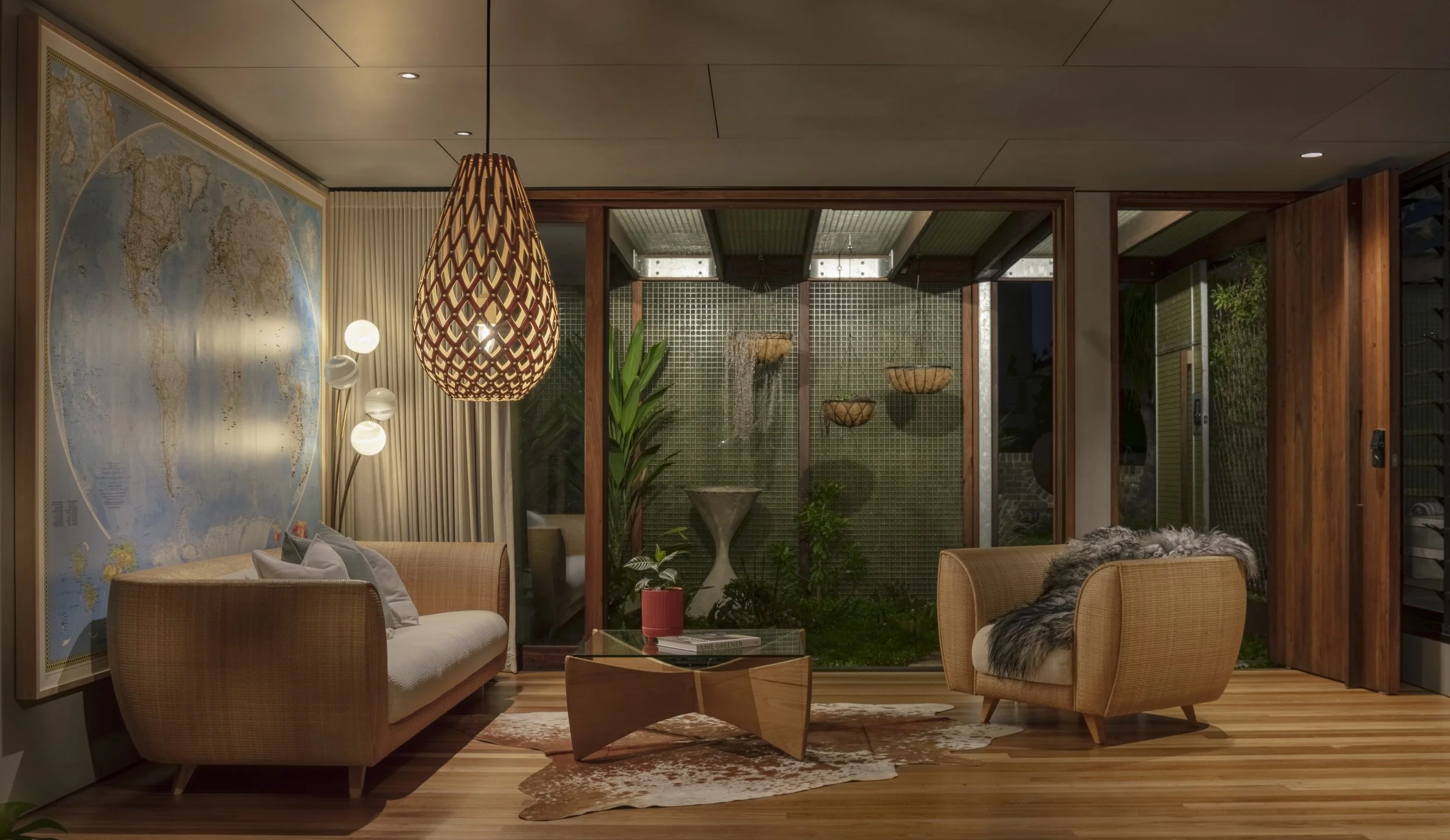
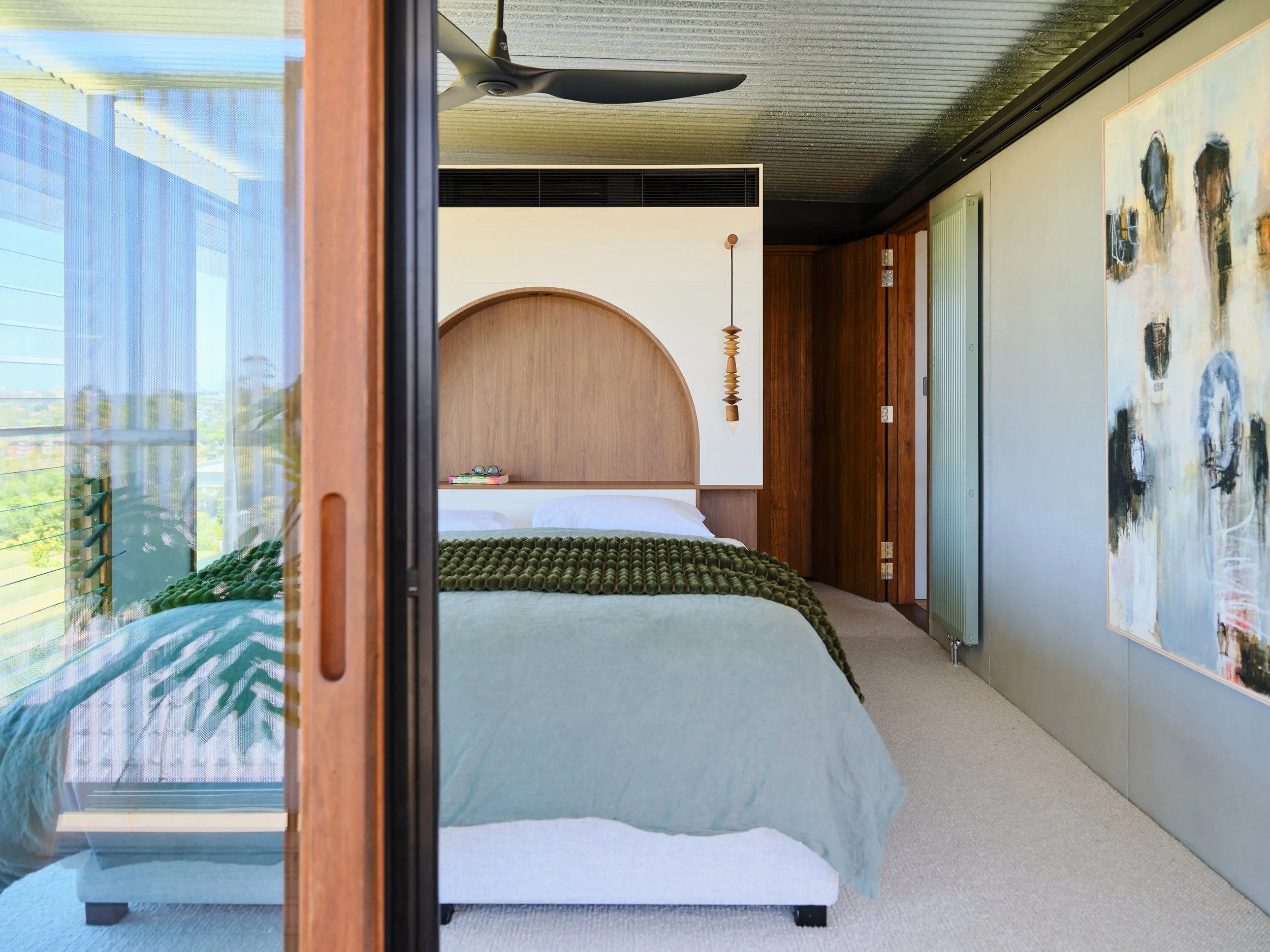
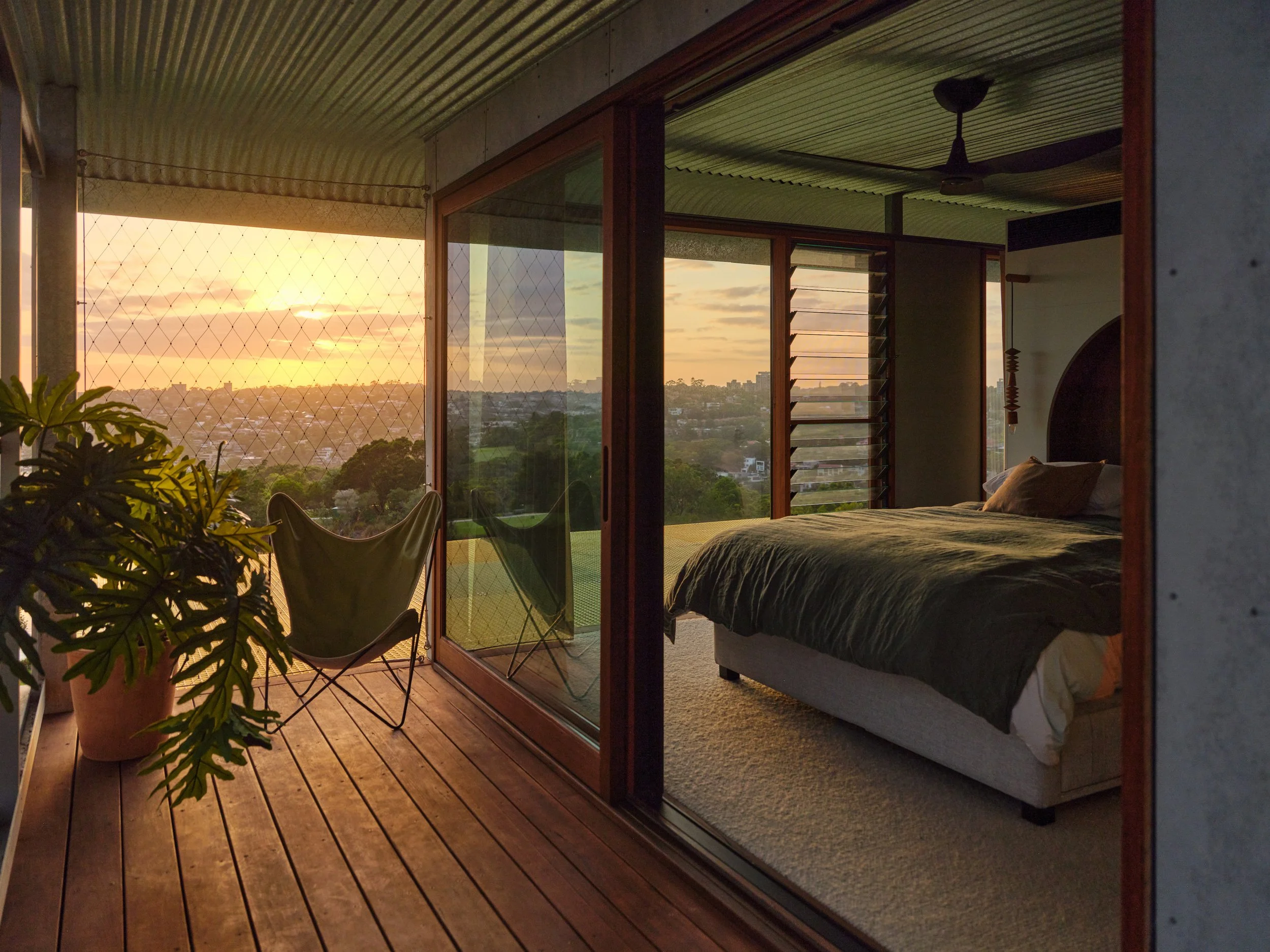
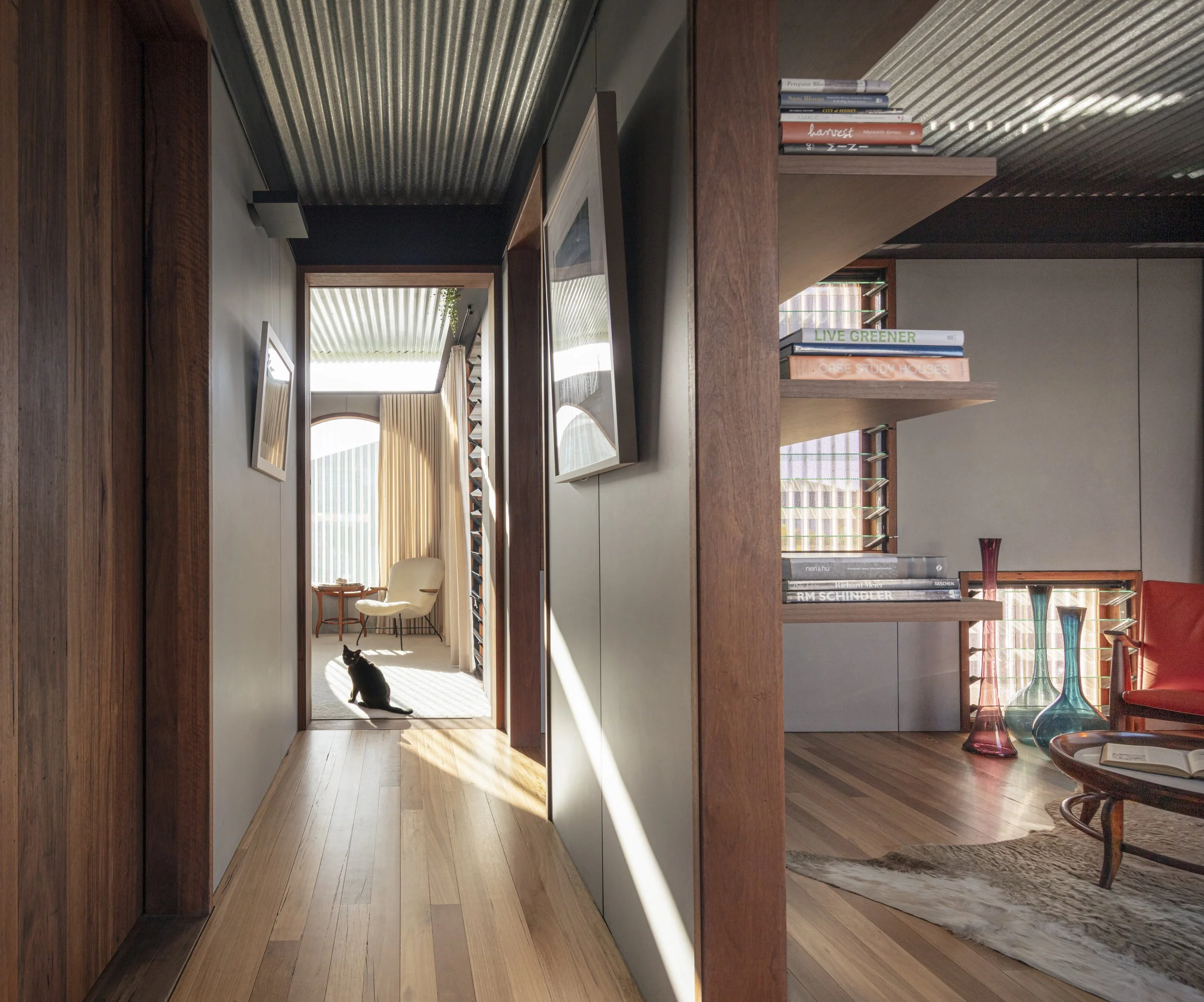
On the first floor, the stair ascends into a light and airy gallery where the family’s artworks hang, illuminated by pleasingly irregular windows. This space gives onto the two kids’ bedrooms at the front of the house, the study/craft room and the main bedroom at the rear. A cargo net connects the study to the rear balcony, turning the airspace over the pool into a fun zone to hang out, play and spend time outdoors. Stainless steel mesh allows free enjoyment of the elevated balconies. In the main bedroom, another dramatic round window invites you to look out to Beauty Point headland.
Because of the corrugated steel ceiling, the first-floor rooms all feature multipurpose steel runners just below the ceiling to hold curtain tracks, hang artwork and support LED uplighting.
Sustainability
The use of timber doors and windows lowers the home’s embodied energy. Where possible, recycled timber was used, for example, on the solid timber kitchen bench. The home is energy self-sufficient with a 13.28-kilowatt photovoltaic solar energy system and two rainwater tanks with a total capacity of 10,000 litres. Landscaping features water-efficient irrigated wicking bed planters to nourish plants year-round.
Project Team
CplusC Team
Thomas Glassock-Warren - Skilled Labour
Damien Arnup - Skilled Labour
Loretta Law – Project Manager
Alex Bonic - Carpenter
Nathan Krstevski - Leading Hand
Tallon Creber - Construction Manager
Clinton Cole - Architect & Builder
Consultants
Building Certification Approvals
Bushfire Planning Services
Certified Energy
CMS Surveyors
Crozier Geotechnical Engineer
Damian O’Toole Town Planning & Heritage Services
NGEO Surveyors
ROR Consulting Engineers
QS Plus
Stellen Consulting
Subcontractors
AHJ Recycled Hardwood Doors & Windows
ARA Renlita Garage Doors
Brazil Construction – Masonry Bricklayers
Brescia Tiling
Eureka Insulation
Flash Metal Roofing
Harvey Norman Commercial
JHG Plumbing
Land Forms Pool & Landscaping
Macweld
North Set Tile & Stone
North South Carpentry
Orange Painting
Pelican Air
Red Oak Carpentry
ReziForm Concrete
SolarPro
Tensile Design Construct
Univenta
WH Williams